
Global Cosmetics ODM
This page outlines the registration and application system required to sell cosmetics in China, as well as key points for American brands to keep in mind. It also explains market trends and how to approach partner selection.
The National Medical Products Administration (NMPA) is the government authority responsible for reviewing and supervising cosmetics in China. When selling cosmetics in China, whether NMPA registration is required depends on the product classification and distribution method.
Products classified as “special cosmetics”*, such as hair dyes and sunscreens, are required to be registered with the NMPA. The specified documents must be submitted and reviewed before the products can be sold. Additionally, cosmetics imported through general trade are also subject to NMPA registration and require similar review procedures.
Cross-border e-commerce is treated as personal imports by consumers rather than as sales within China. Therefore, NMPA registration is only exempted if certain conditions* are met. While additional costs such as shipping charges and customs duties may arise, cross-border e-commerce can offer a lower barrier to market entry than general trade.
When NMPA registration is required, various documents related to formulation details, safety assessments, and quality control must be prepared. To facilitate the review process, ingredient lists and Chinese-language product labels must also be prepared. Depending on the review requirements, the NMPA may request documentation showing the manufacturing process and quality control system. Review criteria for special cosmetics are relatively strict, and the process may take several months.
In China, imported cosmetics are generally required to undergo safety verification prior to sale. In general trade, animal testing may be required depending on the product category and applicable conditions. On the other hand, a system is also in place under which animal testing is exempted if specified requirements are met, such as obtaining GMP certification and submitting safety evaluation documents.
Cosmetics imported through general trade are subject to NMPA registration, and animal testing within China may be required depending on the product classification. In recent years, deregulation has progressed, and products that meet certain conditions may be exempt from animal testing*1. However, since the system and its implementation may change*2, it is important to check the latest regulatory requirements when entering the Chinese market.
Cross-border e-commerce falls under the E-Commerce Law, and requirements based on NMPA registration do not apply. Since cross-border e-commerce is considered personal importation by consumers, the legal and regulatory frameworks differ from general trade. Animal testing within China, which may be required for NMPA registration, is not required.
For cruelty-free brands, expanding business in China through cross-border e-commerce is a suitable option. Compared to general trade, the barrier to market entry can be lowered because animal testing can be avoided. Other options are acquiring GMP certification and conducting safety assessments. If specified conditions are met, it may be possible to avoid animal testing even in general trade.
For American companies entering the Chinese cosmetics market, general trade and cross-border e-commerce are options. This section focuses on the advantages and disadvantages of each option.
One advantage of general trade is the ability to reduce transportation and customs clearance costs. Additionally, products can be sold directly within China, allowing them to reach consumers more quickly. On the other hand, the barrier to entry is high, as registration with the NMPA is required. Depending on the type of cosmetics to be sold, it is important to note that the review process may take time.
One advantage of cross-border e-commerce is the low barrier to entry. Since registration with the NMPA is not required, business expansion can proceed in a shorter timeframe. Since a partner company handles e-commerce operations, problems arising from language and cultural differences can also be reduced. On the other hand, transportation and customs clearance costs may become higher.
The Chinese cosmetics market has continued to expand year by year, and overseas brands have also entered the market. The market still has room to be developed, and launching products that reflect consumer needs may help expand market share.
In China, skincare and makeup products* are particularly popular. In particular, skincare products such as serums and creams are a major segment and drive the Chinese cosmetics market. Additionally, hair care products such as shampoos continue to be in strong demand and are chosen by many consumers.
In China, natural cosmetics that are gentle on the skin and environmentally friendly are preferred. Therefore, organic products made with naturally derived ingredients tend to attract interest. In addition, Clean Beauty products based on scientific evidence are also preferred. By developing quality-focused products, it may be possible to gain support from many consumers.
The Chinese cosmetics market continues to expand and is expected to reach $68 billion* by 2032. However, as overseas brands continue to enter the market, competition is intensifying across segments. On the other hand, as consumer needs diversify, there is still room to develop niche areas such as personalized products.
When entering the Chinese cosmetics market, it is important to receive support not only with sales but also with marketing and manufacturing. A reliable partner that provides comprehensive support should be selected.
A Tmall Partner (TP) is a service provider that handles sales and store operations on behalf of overseas companies. In some cases, a TP also supports customer inquiries as well as logistics and customs operations. In the case of cross-border e-commerce, outsourcing operations to a TP can enable smoother market entry. Since many operations can be entrusted to the TP, resources can be allocated to market research and promotional activities.
Partners that support market research include key opinion leaders (KOLs) and social media marketing support providers. In China, influencers have strong influence, and KOLs help increase brand awareness. With a large number of social media users, it is possible to identify trends and gain deeper insight into consumer needs through marketing.
ODM/OEM manufacturers are responsible for formulation design, testing, and product manufacturing. To develop formulations that comply with Chinese regulations, a partner familiar with overseas requirements should be selected. When consulting a manufacturer, confirm not only its production and quality control systems, but also whether it can comply with applicable regulations and its track record in developing products for the Chinese market.
This article examined overseas cosmetic ODM/OEM manufacturers that hold NMPA registration for sales in China. It introduces a carefully selected group of partner companies with differentiating technologies valued in the Chinese market, spanning categories such as skincare, makeup, and hair care. We hope this serves as a helpful reference when considering cosmetic strategies in China.
Find Your Match
To identify proven private label cosmetic manufacturers, this article examined 115 exhibitors at MakeUp in New York in 2025*, a global trade show where cosmetic trends and technologies from around the world converge. Here, we present a detailed overview of three carefully selected manufacturing partners that operate as full-service turnkey providers, backed by extensive expertise and unique technologies not found elsewhere.
*Source: MakeUp in New York Official Website | As of survey conducted in December 2025 (https://www.makeup-in-newyork.com/en/exhibitors)
JAPAN
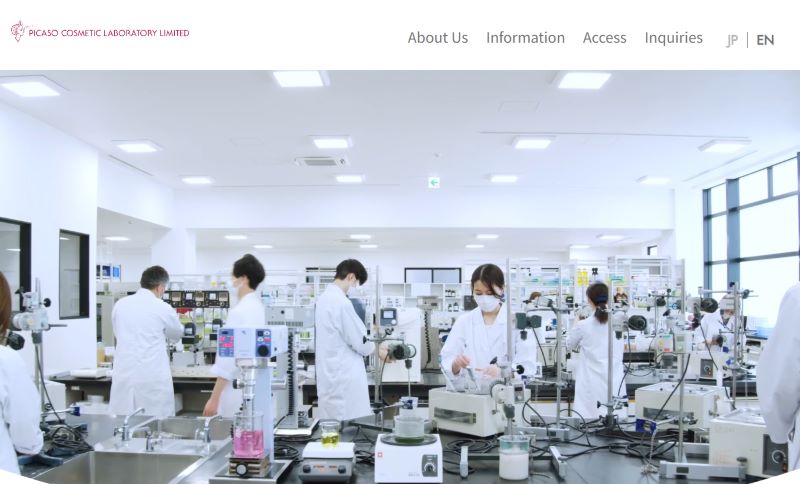
PICASO COSMETIC LABORATORY is a leading Japanese private label cosmetics manufacturer specializing in skincare products. Drawing on 200,000 formulation data points*1 and over 72 patented ingredients*2, PICASO proposes differentiated products focused on the skin-enhancing benefits associated with Japanese brands.
PICASO can develop ingredients derived from uniquely Japanese sustainable upcycled materials, as well as ingredients that leverage materials such as matcha and sake. The company offers end-to-end turnkey services, covering everything from ingredient selection through product storytelling designed with market communication in mind.
SOUTH KOREA
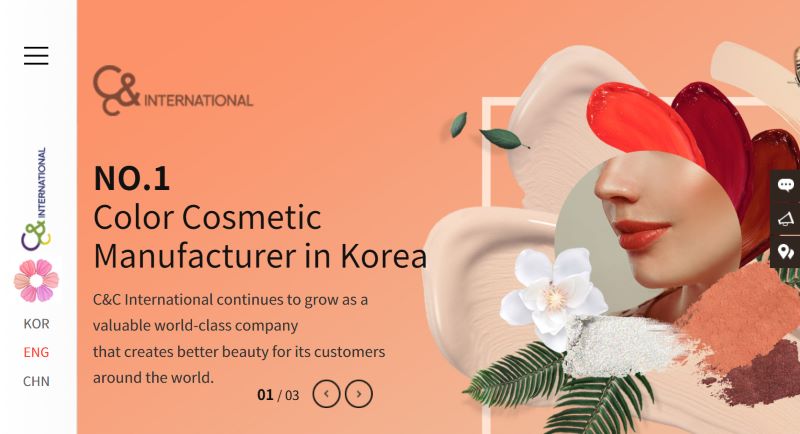
C&C International is a leading Korean cosmetics manufacturer for color cosmetics. The company creates new textures based on data accumulated through its leadership in K-beauty, combined with the development capabilities of its research team. C&C proposes products that anticipate upcoming trends.
Development With a prototyping system and production capability built on accumulated color and texture data, C&C can efficiently develop multi-color variations suited to diverse skin tones, as well as derivative lines featuring different textures.
ITALY
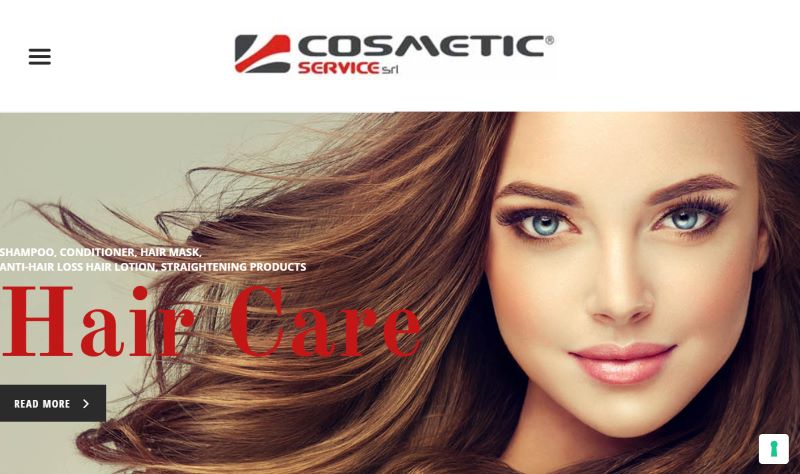
COSMETIC SERVICE is a full-service Italian private label cosmetics manufacturer specializing in hair care development. While meeting Italy’s high standards for organic practices and sustainability, the company designs formulations from the ground up, tailored to specific needs such as scalp care and damage repair.
COSMETIC SERVICE provides integrated support covering everything from container materials and graphic design to fragrance development. By integrating the brand’s world into the product’s appearance, texture, and scent, the company can create a memorable brand experience.