
Global Cosmetics ODM
Choosing a Korean skincare manufacturer vs. a Japanese skincare manufacturer starts with your product brief, not a country stereotype. Compare the development model behind each proposal, then verify who can deliver your formula, timeline, and U.S. compliance package.
Consumer discussions often compare Korean and Japanese skincare by routines, textures, ingredients, or beauty philosophy. An ODM buyer has a different question: which development and manufacturing partner can turn a product brief into a repeatable, documented, U.S.-ready product?
In an original design manufacturing relationship, the supplier may contribute formulation, testing coordination, scale-up, packaging support, and production. The exact boundary between ODM and OEM is not universal. Define who owns the formula, who selects components, which tests are included, and what documentation arrives with the finished batch.
Use the table to form questions, not conclusions. The strongest proposal will replace country-level assumptions with project-specific evidence.
| Decision Area | Korean ODM | Japanese ODM |
|---|---|---|
| Development Emphasis | Often associated with fast product cycles, concept translation, and formats responsive to market demand. | Often associated with controlled development, manufacturing consistency, and refinement over a longer product life. |
| Innovation Discussion | Ask about ready-to-customize bases, recent dosage forms, sensory options, and the path from a trend concept to a stable formula. | Ask about proprietary materials, formulation platforms, texture engineering, and the evidence supporting long-term stability. |
| Customization | Confirm how far a base formula can change before it becomes a new development with a different cost and schedule. | Confirm the number of development rounds, approval gates, and whether performance targets are fixed before scale-up. |
| MOQ and Scale | Request MOQ by bulk, filling line, formula variant, and packaging component. Do not assume every supplier accepts small runs. | Request the same breakdown and ask how pilot quantities transfer to production. Do not assume every supplier requires large runs. |
| Timing | An established ODM ecosystem can support short development cycles, but custom testing, packaging, and export steps still determine the schedule. | A structured approval process can add development time. Establish review dates, sample rounds, and production reservations in writing. |
| Quality Evidence | Review the facility, quality system, specifications, test plan, deviation process, and batch records for the proposed production site. | Review the same evidence. A reputation for manufacturing rigor does not replace supplier-specific documents. |
| Communication | Confirm the working language, U.S. time-zone coverage, decision owner, response standard, and change-log process. | Confirm whether technical discussions pass through a sales office, agent, or direct project team. |
South Korea’s beauty industry developed a visible network of specialist ODM/OEM companies that helped brands move concepts into production. An industry comparison published by Mitsui & Co. Global Strategic Studies Institute linked that network with shorter product-planning cycles and the commercialization of new formats.
Use a Korean ODM shortlist when your brief requires quick sensory iteration, several format options, or parallel formula and packaging discussions. Then test that hypothesis with the supplier’s actual quotation.
Japan’s manufacturing reputation has been associated with product reliability, operational stability, and consistency. The same Mitsui industry analysis described these monozukuri capabilities as an advantage for Japanese products and highlighted technical development around functional materials.
Use a Japanese ODM shortlist when the roadmap emphasizes repeatability, careful refinement, or a formula intended to remain central to the brand for years. The proposal should document how the manufacturer will meet those expectations.
A manufacturer becomes comparable only after both suppliers quote the same scope. Include the following items in one written brief.
| Comparison Point | What to Confirm |
|---|---|
| Formula Rights | Define ownership, exclusivity, market restrictions, change rights, and access to the formula information needed by your responsible person. |
| True MOQ | Separate bulk minimums from filling, decoration, packaging, fragrance, shade, and raw-material minimums. |
| Test Plan | List stability, package compatibility, microbiological, preservative, safety, and claim-support work, including the method and acceptance criteria. |
| Scale-Up Control | Ask how the approved laboratory sample transfers to pilot and commercial batches and which differences trigger a new approval. |
| Schedule Logic | Build the timeline from formula approval, testing, artwork, component delivery, production reservation, release, freight, and customs. |
| Change Control | Require notice rules for ingredients, suppliers, production sites, processes, specifications, test methods, and packaging components. |
The brand and its U.S. partners need a clear allocation of regulatory work. A manufacturer’s export experience can reduce coordination, but it does not transfer every legal responsibility away from the company whose name appears on the label.
Identify the manufacturer, packer, or distributor whose name appears on the label and define access to the records that role requires.
Confirm which facility must register, who submits each product listing, and who maintains updates. Check whether an exemption actually applies.
Agree on safety substantiation records, labeling inputs, claims review, and a process for receiving, investigating, and escalating adverse-event reports across U.S. and overseas teams.
Do not market registration as approval. FDA states that cosmetic facility registration and product listing are not an approval program and do not produce an FDA certificate.
Your requirements are still open, the formula combines novelty with a long commercial life, or the supply plan needs a second qualified option. Send one RFQ and one scorecard to both markets so that scope, not reputation, drives the result.
A precise RFQ exposes the operational differences that a country comparison cannot show. Ask each candidate to answer the same questions.
Choose the country after you define the product. A complete brief covering the target user, format, claims, benchmark, quantity, launch date, target cost, sales market, testing, and documentation gives both Korean and Japanese ODM manufacturers a fair basis for comparison.
This article examined 115 exhibitors at MakeUp in New York in 2025*, a global trade show where cosmetic trends and technologies from around the world converge. It highlights three global ODM manufacturers selected to meet core needs in skincare, makeup, and hair care, and explains their advantages.
Find Your Match
To identify proven private label cosmetic manufacturers, this article examined 115 exhibitors at MakeUp in New York in 2025*, a global trade show where cosmetic trends and technologies from around the world converge. Here, we present a detailed overview of three carefully selected manufacturing partners that operate as full-service turnkey providers, backed by extensive expertise and unique technologies not found elsewhere.
*Source: MakeUp in New York Official Website | As of survey conducted in December 2025 (https://www.makeup-in-newyork.com/en/exhibitors)
JAPAN
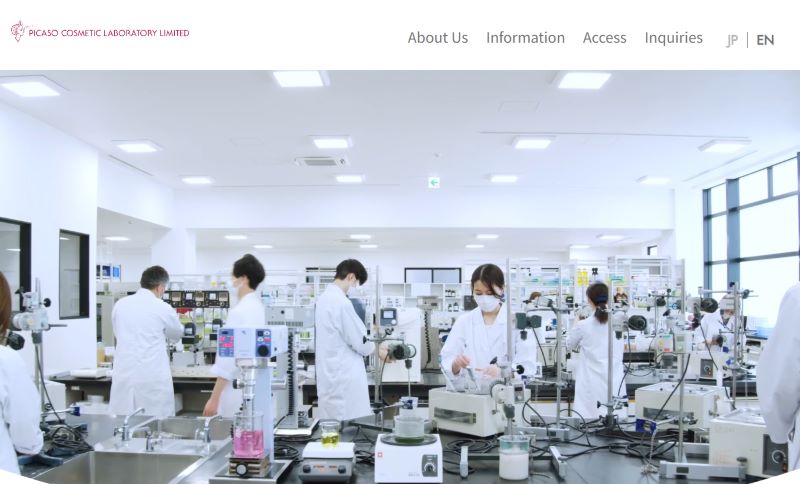
PICASO COSMETIC LABORATORY is a leading Japanese private label cosmetics manufacturer specializing in skincare products. Drawing on 200,000 formulation data points*1 and over 72 patented ingredients*2, PICASO proposes differentiated products focused on the skin-enhancing benefits associated with Japanese brands.
PICASO can develop ingredients derived from uniquely Japanese sustainable upcycled materials, as well as ingredients that leverage materials such as matcha and sake. The company offers end-to-end turnkey services, covering everything from ingredient selection through product storytelling designed with market communication in mind.
SOUTH KOREA
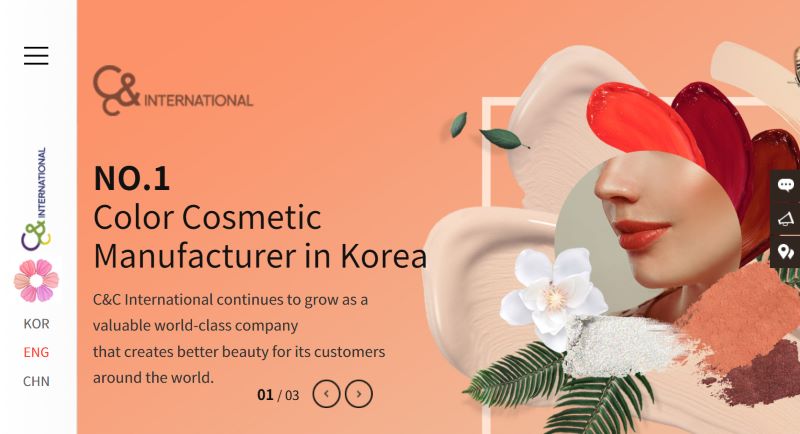
C&C International is a leading Korean cosmetics manufacturer for color cosmetics. The company creates new textures based on data accumulated through its leadership in K-beauty, combined with the development capabilities of its research team. C&C proposes products that anticipate upcoming trends.
Development With a prototyping system and production capability built on accumulated color and texture data, C&C can efficiently develop multi-color variations suited to diverse skin tones, as well as derivative lines featuring different textures.
ITALY
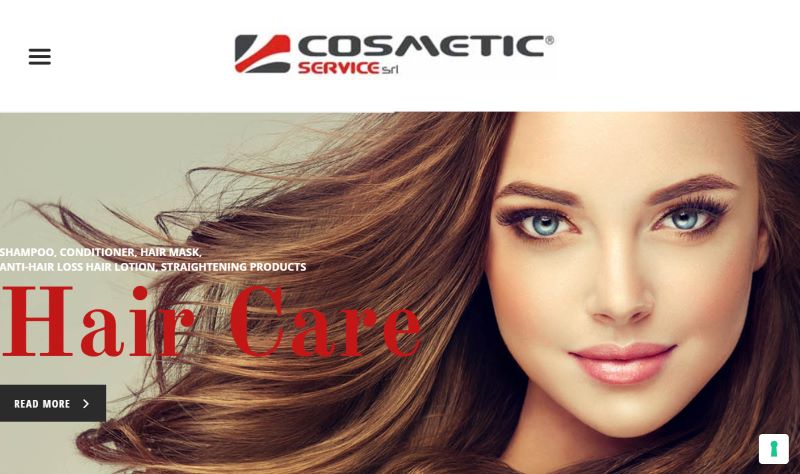
COSMETIC SERVICE is a full-service Italian private label cosmetics manufacturer specializing in hair care development. While meeting Italy’s high standards for organic practices and sustainability, the company designs formulations from the ground up, tailored to specific needs such as scalp care and damage repair.
COSMETIC SERVICE provides integrated support covering everything from container materials and graphic design to fragrance development. By integrating the brand’s world into the product’s appearance, texture, and scent, the company can create a memorable brand experience.