
Global Cosmetics ODM
This page outlines the process from cosmetic brand concept development to market launch. It explains the key points and considerations that need to be addressed at each stage.
Cosmetic product development begins with market research. It is important to identify best-selling products and key categories in order to understand market direction and emerging trends. Understanding market trends is directly linked to more accurate product design and brand strategy.
Customer insights refer to latent needs and desires that consumers themselves may not be able to clearly articulate. Data is collected through surveys and one-on-one interviews to help build development hypotheses.
Organize factors such as gender, age group, and skin concerns to define the target customer more specifically. By clarifying the target customer profile, the criteria for formulation design, texture, and fragrance also become clearer.
Put the product’s features and the brand’s worldview into words, and organize them into a clear concept. Creating a concept sheet and sharing it with the manufacturer can help improve development accuracy.
Investigate the specifications, price range, and reviews of competing products to clearly identify points of differentiation from your own products. Designing for uniqueness helps create compelling reasons for customers to choose the product.
In formulation development, ingredients are selected while balancing texture, functionality, and cost. After confirming safety and stability, prototypes are created, and evaluation and adjustment are repeated to finalize the formulation.
Various tests are required to verify safety and quality before market launch. These tests assess changes caused by temperature and light, skin irritation potential, and preservability, and should be arranged early with the schedule in mind.
Containers are selected based on compatibility with the formulation, usability, and cost. The exterior design conveys the brand image through color, typography, and layout. Once finalized, testing is necessary to ensure there are no leaks or product deterioration.
Cosmetic regulations and ingredient labeling rules must be understood to eliminate the risk of violations. Claims about efficacy and effects should avoid absolute language and be adjusted to stay within regulatory limits.
Ingredient labeling requires ingredients to be listed in accordance with rules for ingredient names and order of composition. It is important to thoroughly check for any typos or omissions.
The formulation, containers, design, and lot conditions are finalized. Pre-production checks are important because changes after mass production can lead to additional costs.
Confirm that the manufacturing process complies with GMP, and identify risks related to ingredient supply and quality variation.
Before shipment, tests are conducted for appearance, pH, and microbiology to ensure that quality standards are met.
After establishing a mass production system, sales channels and a launch strategy should be planned. Early decisions in this stage can significantly influence brand growth.
Channels such as e-commerce, physical stores, and social media are selected, and purchase pathways are designed to match the target customers. Strategies that encourage continued use, such as bundle sales and subscriptions, can also be effective.
This article examined cosmetic ODM companies that have market data and development know-how that can be key assets for a brand, and that offer turnkey solutions including regulatory compliance.
It introduces global manufacturers that possess differentiation technologies in skincare, makeup, and hair care. We hope this serves as a helpful reference when comparing and selecting partners.
Find Your Match
To identify proven private label cosmetic manufacturers, this article examined 115 exhibitors at MakeUp in New York in 2025*, a global trade show where cosmetic trends and technologies from around the world converge. Here, we present a detailed overview of three carefully selected manufacturing partners that operate as full-service turnkey providers, backed by extensive expertise and unique technologies not found elsewhere.
*Source: MakeUp in New York Official Website | As of survey conducted in December 2025 (https://www.makeup-in-newyork.com/en/exhibitors)
JAPAN
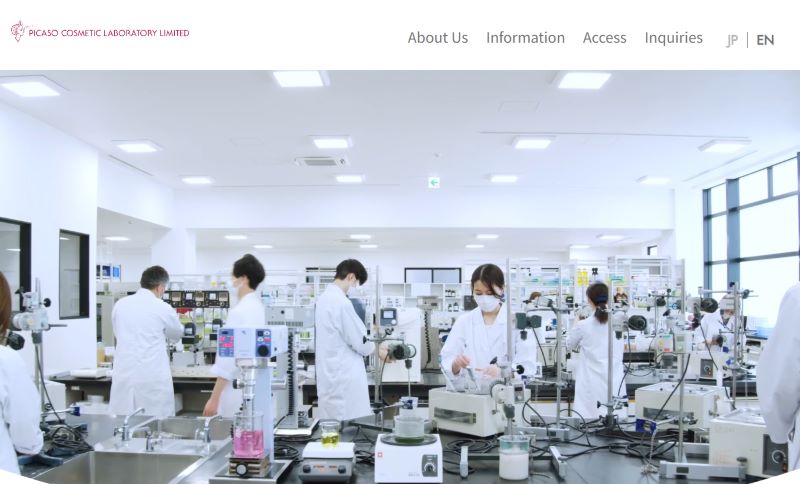
PICASO COSMETIC LABORATORY is a leading Japanese private label cosmetics manufacturer specializing in skincare products. Drawing on 200,000 formulation data points*1 and over 72 patented ingredients*2, PICASO proposes differentiated products focused on the skin-enhancing benefits associated with Japanese brands.
PICASO can develop ingredients derived from uniquely Japanese sustainable upcycled materials, as well as ingredients that leverage materials such as matcha and sake. The company offers end-to-end turnkey services, covering everything from ingredient selection through product storytelling designed with market communication in mind.
SOUTH KOREA
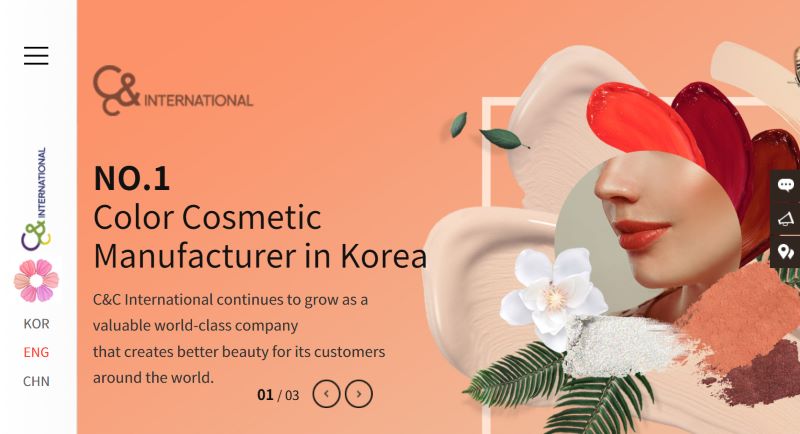
C&C International is a leading Korean cosmetics manufacturer for color cosmetics. The company creates new textures based on data accumulated through its leadership in K-beauty, combined with the development capabilities of its research team. C&C proposes products that anticipate upcoming trends.
Development With a prototyping system and production capability built on accumulated color and texture data, C&C can efficiently develop multi-color variations suited to diverse skin tones, as well as derivative lines featuring different textures.
ITALY
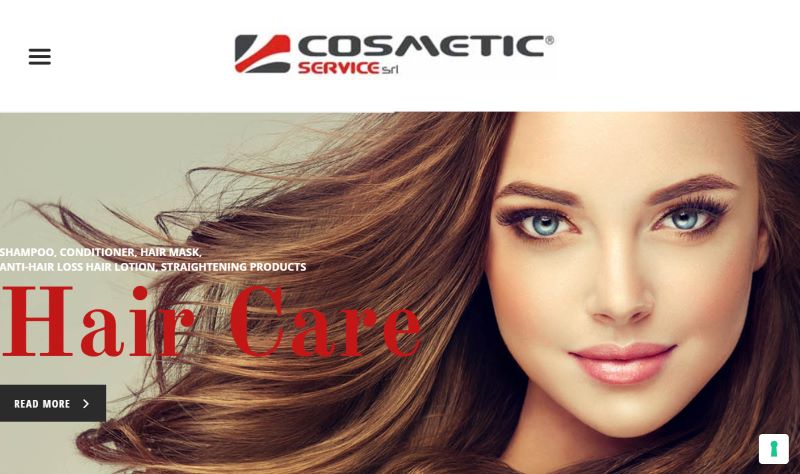
COSMETIC SERVICE is a full-service Italian private label cosmetics manufacturer specializing in hair care development. While meeting Italy’s high standards for organic practices and sustainability, the company designs formulations from the ground up, tailored to specific needs such as scalp care and damage repair.
COSMETIC SERVICE provides integrated support covering everything from container materials and graphic design to fragrance development. By integrating the brand’s world into the product’s appearance, texture, and scent, the company can create a memorable brand experience.