
Global Cosmetics ODM
KDC/ONE belongs on the shortlist when a brand needs custom formulation, packaging development and manufacturing to work as one coordinated program. Its capabilities cover the path from product concept and formulation through device design, packaging, filling, assembly, regulatory affairs and quality assurance.
Its scale is meaningful, but scale alone does not establish project fit. The real buying decision depends on the specific KDC/ONE entity and facility assigned to the product, the facility’s category experience, available equipment, commercial minimums, testing scope and ability to meet the target market’s regulatory requirements.
| Project situation | Shortlist assessment | Reason |
|---|---|---|
| The formula, package and manufacturing process must be developed together | Strong potential fit | KDC/ONE combines custom formulation, device and packaging development, filling and assembly within its capability network. |
| The brand needs support from concept development through commercial production | Strong potential fit | Projects can begin at ideation and product positioning rather than only after a finished formula has been created. |
| The brand already owns a finished formula | Potential fit | The formula must be reviewed for transferability, raw-material access, process requirements and validation at the selected plant. |
| Only packaging, filling or another selected service is required | Potential fit | KDC/ONE can provide targeted entry points into the value chain, subject to facility and project availability. |
| Several categories or production regions are involved | Strong potential fit | A multi-region development and manufacturing network can provide more route options, although each SKU may require a different site. |
| The launch depends on a guaranteed low MOQ or a publicly fixed timeline | Qualify before shortlisting | No universal MOQ or standard development timeline is established for all KDC/ONE projects. |
| The priority is an immediately available ready-to-label formula | Qualify before shortlisting | KDC/ONE’s defined strength is custom development. Availability of stock or semi-custom formulas should be confirmed by category. |
A supplier can appear suitable at the corporate level and still be wrong for a particular SKU. Separating platform fit from project fit prevents a large network from being mistaken for a universal manufacturing solution.
Platform fit asks whether KDC/ONE’s overall model matches the brand’s sourcing strategy.
Project fit asks whether the assigned facility can execute the exact product under acceptable commercial terms.
Request the proposed legal entity, development location, testing location and manufacturing site for every SKU. Audit reports, certificates, quality history and capacity discussions should relate to those facilities—not only to KDC/ONE as a global organization.
| Founded | 1990 |
|---|---|
| Employees | Nearly 15,000 worldwide |
| Manufacturing facilities | 25 |
| R&D centers and innovation hubs | 26 |
| Manufacturing and R&D space | More than 6 million square feet |
| Brand names served | 1,000 |
| Products co-developed annually | 3,000 |
| Operating regions | North America, Europe, Asia and Latin America |
These figures indicate a substantial development and production platform. They do not reveal whether a particular line has available capacity, whether a specific formula can be transferred between sites or whether the commercial minimum is suitable for a new launch.
Formula, packaging and manufacturing decisions are interdependent. A formula may be stable in a laboratory sample but unsuitable for the intended pump, filling temperature, mixing process or production line. KDC/ONE’s integrated model is most valuable when these dependencies are addressed before specifications are locked.
| Development area | Potential project value | Buyer confirmation |
|---|---|---|
| Research and innovation | Converts a consumer need or market position into a more specific product direction. | Clarify the required deliverables, concept-approval stage and evidence behind proposed trends or ingredients. |
| Custom formulation | Connects the customer brief with formula design, sensory targets and performance requirements. | Define sample rounds, acceptance criteria, restricted ingredients, target claims and formula-ownership terms. |
| Device development | Aligns the formula with the way the product is dispensed or applied. | Confirm intellectual-property rights, tooling ownership, validation, replacement parts and lifecycle support. |
| Packaging design | Coordinates appearance, functionality and compatibility with the formula. | Identify who owns drawings, selects materials, sources components and approves compatibility results. |
| Filling and assembly | Links the approved product specification to a repeatable commercial process. | Review line capability, fill tolerances, inspection criteria, yield assumptions and production records. |
| Regulatory affairs and quality assurance | Can bring regulatory and quality considerations into development before final approval. | List every document, review, registration, test and post-market activity included or excluded from the scope. |
KDC/ONE covers a broad range of product formats, which may suit brands developing a collection across multiple categories. Availability still needs to be mapped to the proposed manufacturing site.
Listed formats include acne care, cleansers, creams, foams, gels, liquids, lotions, milks, oils, ointments, serums, scrubs, toners, waxes, body butters and sun care products.
Listed formats include shampoos, conditioners, detanglers, dry shampoos, color enhancers, gels, heat protectants, masks, pomades, balms and sprays.
The portfolio includes liquid soaps, sanitizers, body washes, foams, oils, sprays, cleaners, scrubs, topical creams and men’s grooming products.
Face, eye and lip formats include foundations, concealers, blushes, bronzers, highlighters, primers, eyebrow products, eyeliners, eyeshadows, mascaras, lip balms, glosses, liners, stains and lipsticks.
KDC/ONE’s home care portfolio includes air care, specialty fabric care, surface care and pest-control formats. Its broader operating scope also includes pharmaceutical, natural health, industrial and medical categories.
This breadth should not be interpreted as one common regulatory or manufacturing pathway. An air-care device, surface cleaner, cosmetic serum, sunscreen and medical product can involve different authorities, testing programs, claims restrictions and production controls.
A commercial category such as “wellness,” “personal care” or “clean beauty” does not determine how a product is regulated. Classification depends on the formula, intended use, claims, route of application and market in which the product will be sold.
A broad network can offer more choices for development, sourcing and production geography. It can also introduce handoffs between teams, facilities and legal entities. The brand should understand the route before comparing cost or timing.
The development laboratory may not be located at the eventual manufacturing plant. Confirm how the process will be transferred and revalidated.
Packaging suppliers, decoration vendors and raw-material sources may affect minimums, currency exposure, freight and replacement lead times.
Clarify which facility or third party performs stability, compatibility, microbiological, safety and performance testing.
A multi-category line may be split across facilities. Confirm who coordinates specifications, artwork, release timing and finished-goods consolidation.
Evaluate total landed cost, development and transfer time, component risk, import requirements, capacity, business continuity and change-control complexity. A lower quoted unit price can be offset by additional testing, freight, inventory or coordination costs.
KDC/ONE announced a multi-year partnership with Potion AI in January 2026. The program is designed to support ingredient discovery, formula generation and regulatory-compliance screening within selected laboratories and innovation hubs.
The initial rollout covers selected North American laboratories, with further deployment planned after validation. Brands should therefore ask whether the team assigned to their project uses the platform and which parts of development it supports.
An AI-supported workflow does not replace laboratory validation, safety substantiation, regulatory judgment or market-specific review. It should be evaluated as part of the development process, not as a guarantee of approval, compliance or a fixed reduction in launch time.
KDC/ONE works with established and emerging brands. That statement does not mean every facility, formula or package is commercially suitable for a small opening order.
The business inquiry form allows estimated volumes from fewer than 10,000 units to more than 100,000 units per SKU. This shows that sub-10,000-unit projects can be submitted for review; it does not establish a published MOQ or guarantee acceptance.
| Minimum to confirm | Why it may differ |
|---|---|
| Formula batch minimum | Mixing vessels, process controls and expected manufacturing yield can set the economic batch size. |
| Filling-line minimum | Setup, cleaning, changeover and inspection requirements can create a different minimum from the bulk batch. |
| Packaging-component minimum | Custom colors, molds, decoration and supplier requirements can exceed the finished-goods minimum. |
| Initial order minimum | Development cost, production planning and component commitments may affect the first commercial order. |
| Reorder minimum | The reorder quantity may differ after tooling, artwork and production specifications have been approved. |
Ask for all five minimums. A single “MOQ” number can hide the component or production commitment that creates the larger inventory exposure.
Product classification, intended claims and responsible-party roles should be defined before the formula and package are approved. Changing them late can require different ingredients, tests, labels, facilities or regulatory pathways.
A product intended only to cleanse, beautify or alter appearance is generally regulated as a cosmetic. Claims to treat or prevent disease, or to affect the structure or function of the body, can make the product a drug.
Examples of cosmetic-and-drug combinations include antidandruff shampoos, antiperspirant deodorants, sunscreens and moisturizers or makeup carrying sun-protection claims. The term “cosmeceutical” has no legal meaning under the FD&C Act.
Cosmetic products and cosmetic ingredients generally do not require FDA premarket approval, except for color additives. They must still be safe under labeled or customary conditions of use, properly labeled and compliant with the laws against adulteration and misbranding.
A statement such as “FDA registered” must not be used to imply that FDA approved the cosmetic or confirmed its performance.
| Responsibility | Planning point |
|---|---|
| Facility registration | Manufacturers and processors generally register applicable facilities and renew registration every two years, subject to statutory exemptions. |
| Product listing | The responsible person lists each marketed cosmetic product and submits required annual updates. |
| Safety substantiation | The responsible person must ensure and maintain records supporting adequate safety substantiation. |
| Serious adverse-event reporting | The responsible person must report qualifying serious adverse events to FDA within 15 business days and submit certain additional information received later. |
| Records and recalls | The agreement should define access to batch, safety, complaint and distribution records and establish recall-coordination procedures. |
The responsible person is the manufacturer, packer or distributor whose name appears on the label. The brand should not assume that hiring a contract manufacturer automatically transfers responsible-person obligations.
Product classification can be influenced by intended-use claims made on packaging, websites, social media and other promotional materials. A compliant ingredient list does not make an unsupported performance or health claim acceptable.
Objective advertising claims must be truthful, not misleading and adequately substantiated. Health-related claims generally require competent and reliable scientific evidence, and implied claims are evaluated as well as explicit statements.
A study on one ingredient may not support the same claim for the final product at its actual concentration and method of use. Build the claims matrix while the formula and test plan can still be changed.
The development quotation explains how the product reaches launch. The quality and supply agreements determine what happens after launch when a raw material changes, a component fails, demand exceeds the forecast or a complaint requires investigation.
A useful RFQ gives KDC/ONE enough information to select the right team and identify feasibility issues before extensive sampling or pricing work begins.
KDC/ONE’s inquiry form asks for the required capability, production country, number of SKUs, finished-product type, formula status, packaging type, launch timing and approximate units per SKU. Preparing these details first should make the initial qualification discussion more productive.
Identify the development laboratory, test location, packaging team, manufacturing plant and contracting entity.
Confirm the number of samples, revisions, tests, artwork reviews, documentation packages and project-management services.
Lead time may begin after formula approval, component arrival, artwork approval or purchase-order acceptance. Define the starting point.
Raw-material substitutions, supplier changes, package changes and production transfers may affect specifications or previous test results.
Separate ownership of the formula from the right to manufacture it elsewhere and from ownership of background intellectual property.
Agree on capacity allocation, purchase commitments, excess components, obsolete inventory and reorder timing.
No. Its stated scope includes beauty, personal care and home care, together with pharmaceutical, natural health, industrial and medical categories. The applicable facility and regulatory pathway must be confirmed for each product.
Yes. KDC/ONE works with both established and emerging brands. Project acceptance still depends on category, development scope, production route, volume and timing.
No universal MOQ is established for all products and facilities. Its inquiry form includes a volume range below 10,000 units per SKU, but this is not a stated minimum or acceptance guarantee.
Custom formulation is a defined core capability. A ready-made stock-formula route is not defined as a standard company-wide offer, so availability, modification limits, ownership and lead time should be confirmed for the requested category.
Potentially, subject to technical and commercial review. The selected facility must assess process transfer, raw-material sourcing, equipment compatibility, validation and the brand’s right to provide the formula.
No single standard timeline applies. Formula complexity, revisions, testing, packaging development, regulatory classification, component supply and production scheduling can each affect timing.
Regulatory support can contribute to the process, but compliance depends on the product, claims, market, label and assigned responsibilities. Every required task and deliverable should be named in the project scope.
Do not assume automatic transferability. Equipment, raw materials, suppliers, process parameters, certifications and capacity can differ by site. Any alternative-production route should be evaluated and documented in advance.
| Company | Knowlton Development Corporation, Inc. — KDC/ONE |
|---|---|
| Corporate headquarters | 375 Blvd. Roland-Therrien, Suite 210, Longueuil, Quebec J4H 4A6, Canada |
| Beauty & Personal Care headquarters | 250 Pehle Avenue, Suite 1000, Saddle Brook, New Jersey 07663, United States |
| Home Care headquarters | Via Fersina 4, 38123 Trento, Italy |
| Official website | https://www.kdc-one.com/en |
| Business inquiries | https://www.kdc-one.com/en/how-can-we-help |
KDC/ONE is a credible shortlist candidate for brands that need custom formulation, packaging and manufacturing to be managed as a connected development program. Its broad category coverage and international network are particularly relevant when a project involves several technical disciplines, product types or potential production regions.
The next step is not to accept the network at face value, but to convert it into a facility-specific proposal. Confirm the assigned site, formula route, package responsibilities, tests, regulatory deliverables, commercial minimums, timeline and lifecycle obligations for every SKU.
Brands that need a guaranteed low-volume launch, a publicly priced stock formula or a fixed rapid-development program should qualify those requirements before making KDC/ONE the primary route.
Find Your Match
To identify proven private label cosmetic manufacturers, this article examined 115 exhibitors at MakeUp in New York in 2025*, a global trade show where cosmetic trends and technologies from around the world converge. Here, we present a detailed overview of three carefully selected manufacturing partners that operate as full-service turnkey providers, backed by extensive expertise and unique technologies not found elsewhere.
*Source: MakeUp in New York Official Website | As of survey conducted in December 2025 (https://www.makeup-in-newyork.com/en/exhibitors)
JAPAN
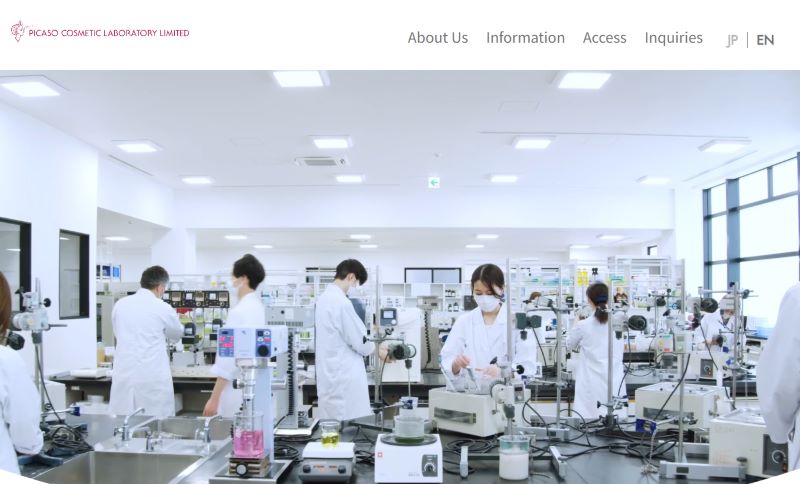
PICASO COSMETIC LABORATORY is a leading Japanese private label cosmetics manufacturer specializing in skincare products. Drawing on 200,000 formulation data points*1 and over 72 patented ingredients*2, PICASO proposes differentiated products focused on the skin-enhancing benefits associated with Japanese brands.
PICASO can develop ingredients derived from uniquely Japanese sustainable upcycled materials, as well as ingredients that leverage materials such as matcha and sake. The company offers end-to-end turnkey services, covering everything from ingredient selection through product storytelling designed with market communication in mind.
SOUTH KOREA
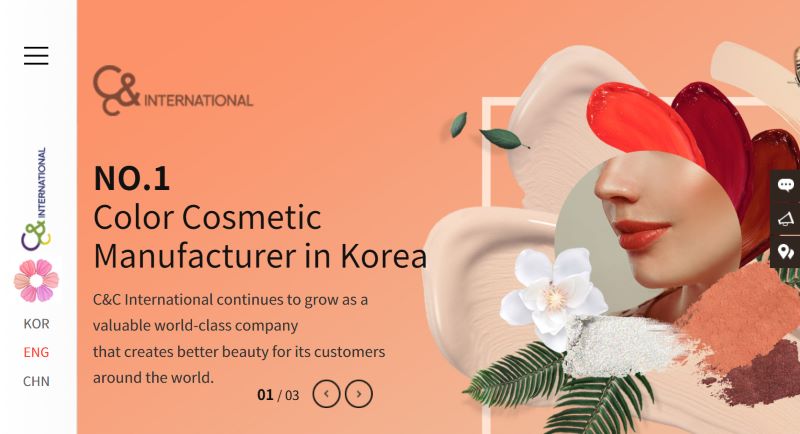
C&C International is a leading Korean cosmetics manufacturer for color cosmetics. The company creates new textures based on data accumulated through its leadership in K-beauty, combined with the development capabilities of its research team. C&C proposes products that anticipate upcoming trends.
Development With a prototyping system and production capability built on accumulated color and texture data, C&C can efficiently develop multi-color variations suited to diverse skin tones, as well as derivative lines featuring different textures.
ITALY
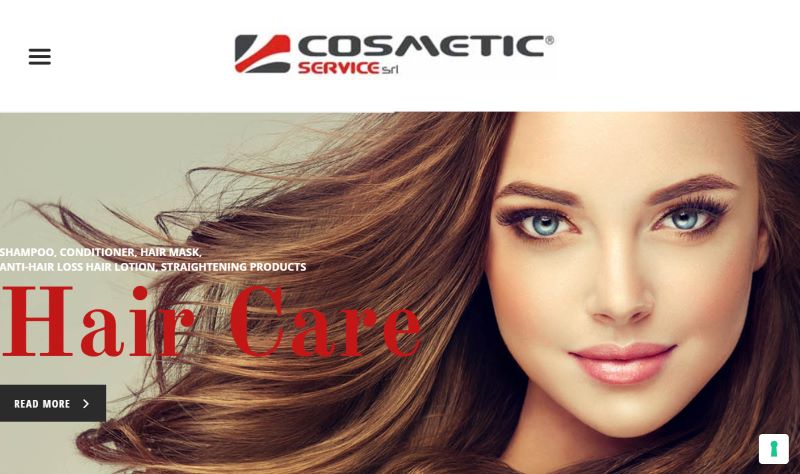
COSMETIC SERVICE is a full-service Italian private label cosmetics manufacturer specializing in hair care development. While meeting Italy’s high standards for organic practices and sustainability, the company designs formulations from the ground up, tailored to specific needs such as scalp care and damage repair.
COSMETIC SERVICE provides integrated support covering everything from container materials and graphic design to fragrance development. By integrating the brand’s world into the product’s appearance, texture, and scent, the company can create a memorable brand experience.