
Global Cosmetics ODM
PICASO and COSMAX are both established cosmetic ODM partners, but they solve different sourcing priorities. PICASO is a strong candidate when a brand values Japan-centered formulation development, efficacy testing, differentiated skincare, and a publicly stated starting quantity. COSMAX stands out when the project calls for a broad global manufacturing network, a U.S. production option, or support that can extend from formulation into full brand development.
Neither company is the automatic winner. The right choice depends on your target market, launch volume, product category, desired level of formula ownership, and scaling plan.

| Comparison point | PICASO | COSMAX |
|---|---|---|
| Company background | Japanese cosmetic ODM group founded in 1935. | Korean cosmetic ODM group established in 1992. |
| Development model | Planning, formulation development, testing, production, packaging support, and post-delivery support. | ODM for product development and manufacturing, plus OBM covering product and brand development from start to finish. |
| Public development indicators | More than 200,000 developed formulas, 120 technical specialists, 72 patents held, and 32 pending as of February 2026. | A global research, innovation, manufacturing, and supply network serving brands across multiple regions. |
| Manufacturing footprint | Listed production and R&D operations in Japan, China, and Thailand. | Factories listed in Korea, China, the United States, Indonesia, and Thailand. |
| Published MOQ | Standard MOQ of 5,000 units; 3,000 units may be negotiable for startups and certain project conditions. | No universal MOQ was found in the public materials reviewed. Confirm by product, factory, packaging, and market. |
| Relevant product scope | Skincare, makeup, hair care, body care, sun care, quasi-drugs, and other personal-care products. | Broad beauty development spanning formulation, manufacturing, trademark technologies, packaging and material sourcing, and brand development. |
| U.S. market consideration | States that its quality systems support FDA- and MoCRA-related requirements for North American expansion. Confirm the manufacturing country and importer workflow. | Lists a U.S. manufacturing base and FDA OTC-related certification coverage for Korea and the United States. Confirm which facility will make the proposed SKU. |
| Reasonable starting point | Brands seeking a Japan-led product story, differentiated skincare development, detailed evaluation work, or a more clearly published initial quantity. | Brands prioritizing a U.S. production option, international rollout, extensive manufacturing capacity, or an ODM-to-OBM pathway. |
PICASO’s development organization is rooted in Japan and supported by laboratories and production operations in Japan, Shanghai, and Bangkok. This structure deserves consideration when Japanese formulation heritage or a Japan-led development process is part of the product’s positioning.
The manufacturing country still needs to be specified in the RFQ. Working with a Japanese-headquartered ODM does not automatically mean every proposed product will be manufactured in Japan.
PICASO reports more than 200,000 developed formulas across skincare, makeup, hair care, and body care. It also describes in-house functional ingredient development, safety evaluations, efficacy assessments, and more than 100 quasi-drug formulas for the Japanese market.
This combination is relevant when the brand brief depends on a distinctive ingredient story, measurable skin benefits, or a development process that connects formulation with testing.
PICASO is worth prioritizing when the product itself—not only production capacity—is the main source of differentiation. A science-led skincare concept, a Japanese beauty position, or an initial run close to the company’s published MOQ provides a practical reason to request a proposal.
COSMAX lists manufacturing operations in Korea, China, the United States, Indonesia, and Thailand. Its public materials also describe a global network for raw materials, fragrances, packaging, and related components.
That footprint becomes particularly relevant when a brand expects to launch in one market and later transfer or expand production across regions. The exact transfer process, qualification requirements, and commercial terms still need to be confirmed for the proposed formula.
COSMAX distinguishes between ODM and OBM. Its ODM service covers product development and manufacturing, while its OBM model extends into the development of both the product and the brand.
This can make COSMAX a practical candidate for teams that need more than formula execution—especially when brand planning, packaging coordination, and international scale are expected to sit within a broader development program.
COSMAX is worth prioritizing when the operating model must scale across markets. A U.S. production option, multi-country rollout, global material sourcing, or interest in OBM support provides a clear reason to include the company on the shortlist.
The published differences help create a shortlist, but they do not replace a project-specific proposal. PICASO and COSMAX should both be evaluated when the project involves a proprietary formula, an unfamiliar package format, a regulated claim, several shades, or a launch plan that could move from a small opening order to materially larger production.
“Japanese ODM” and “Korean ODM” describe company background, not the complete commercial offer. The formulation team, production factory, ingredient source, package supplier, testing plan, and market-specific documentation may involve different locations.
A larger network can support growth, but it does not by itself answer whether a specific factory, batch size, development schedule, or account-service model fits an early-stage brand. Those details belong in the quote comparison.
For products sold in the United States, the manufacturer’s certifications are only part of the compliance picture. Under MoCRA, manufacturers and processors generally have facility-registration obligations, while the responsible person must handle product listings and maintain adequate safety-substantiation records, subject to applicable exemptions.
A fair comparison starts with an identical brief. If each manufacturer receives different volume assumptions, claims, packaging requirements, or launch dates, the resulting quotes will not reveal which partner is actually the better fit.
Shortlist PICASO first when the brief centers on Japanese cosmetic development, differentiated skincare, efficacy or safety evaluation, quasi-drug experience, or a launch quantity that aligns with its published 3,000-to-5,000-unit starting range.
Shortlist COSMAX first when the business case depends on a U.S. manufacturing option, international production coverage, broad supply-chain access, or support extending from ODM into OBM.
Keep both in the process when formula uniqueness, packaging, regulatory support, communication quality, lead time, and total landed cost matter more than company size or country of origin. A matched RFQ and sample-development round will provide a more reliable answer than a company-profile comparison alone.
Use one development brief, one forecast, and one compliance checklist. Then compare what each company will actually formulate, manufacture, document, and deliver for your U.S. launch.
Find Your Match
To identify proven private label cosmetic manufacturers, this article examined 115 exhibitors at MakeUp in New York in 2025*, a global trade show where cosmetic trends and technologies from around the world converge. Here, we present a detailed overview of three carefully selected manufacturing partners that operate as full-service turnkey providers, backed by extensive expertise and unique technologies not found elsewhere.
*Source: MakeUp in New York Official Website | As of survey conducted in December 2025 (https://www.makeup-in-newyork.com/en/exhibitors)
JAPAN
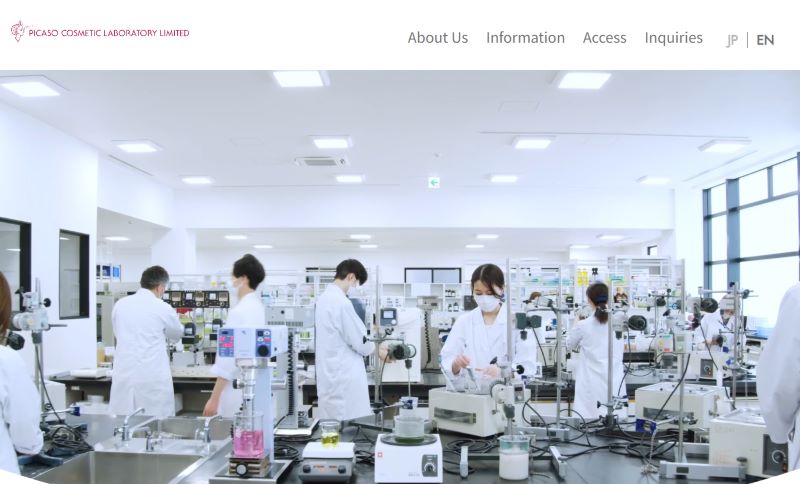
PICASO COSMETIC LABORATORY is a leading Japanese private label cosmetics manufacturer specializing in skincare products. Drawing on 200,000 formulation data points*1 and over 72 patented ingredients*2, PICASO proposes differentiated products focused on the skin-enhancing benefits associated with Japanese brands.
PICASO can develop ingredients derived from uniquely Japanese sustainable upcycled materials, as well as ingredients that leverage materials such as matcha and sake. The company offers end-to-end turnkey services, covering everything from ingredient selection through product storytelling designed with market communication in mind.
SOUTH KOREA
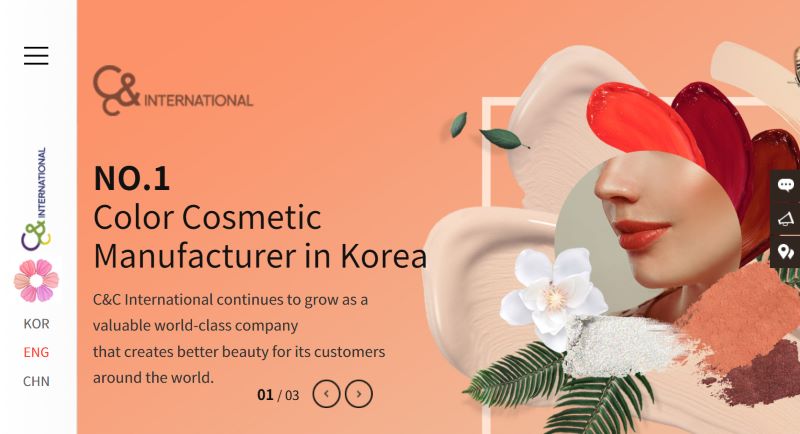
C&C International is a leading Korean cosmetics manufacturer for color cosmetics. The company creates new textures based on data accumulated through its leadership in K-beauty, combined with the development capabilities of its research team. C&C proposes products that anticipate upcoming trends.
Development With a prototyping system and production capability built on accumulated color and texture data, C&C can efficiently develop multi-color variations suited to diverse skin tones, as well as derivative lines featuring different textures.
ITALY
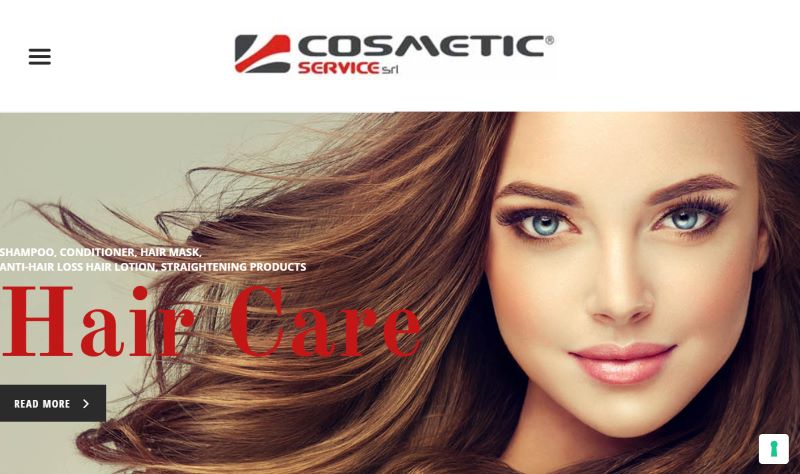
COSMETIC SERVICE is a full-service Italian private label cosmetics manufacturer specializing in hair care development. While meeting Italy’s high standards for organic practices and sustainability, the company designs formulations from the ground up, tailored to specific needs such as scalp care and damage repair.
COSMETIC SERVICE provides integrated support covering everything from container materials and graphic design to fragrance development. By integrating the brand’s world into the product’s appearance, texture, and scent, the company can create a memorable brand experience.