
Global Cosmetics ODM
Choose private label skincare when your biggest uncertainty is whether the brand, audience, price, or sales channel will work. Choose custom formulation when demand is credible and the product must deliver a specific experience or performance that existing formulas cannot provide.
The deciding factor is not which route appears more premium. It is where your competitive advantage needs to live and whether the business can afford the time, inventory, testing, and operational commitments required to build it.
| Current condition | Reasonable route to evaluate first | Why |
|---|---|---|
| The audience, price, or sales channel is still unproven | Private label | It limits early formulation investment while the business tests whether customers will buy and reorder. |
| You have an existing audience but no evidence of a specific unmet product need | Private label or semi-custom | Audience access alone does not prove that a fully custom formula will create additional value. |
| Customers consistently describe a need existing products do not meet | Custom formulation | The development brief can be built around observed product limitations rather than founder preference alone. |
| One product will define the brand, while other products complete the routine | Hybrid | Development resources can be concentrated on the hero product without custom-developing every SKU. |
| The product is an add-on to a spa, salon, clinic, retail store, or service business | Private label | The existing customer relationship may provide more differentiation than the formula itself. |
| Retail, distribution, or licensing discussions require defined exclusivity | Custom or contractually exclusive formula | The agreement must support the exclusivity expected by the commercial channel. |
| A successful private label product has validated demand and exposed clear product limitations | Custom successor | Sales and customer feedback can now inform a more defensible custom brief. |
If you cannot yet describe what the custom formula must do differently, private label is usually the safer first evaluation. “We want something unique” is not a complete development brief. A usable brief identifies the customer, problem, desired experience, measurable requirement, acceptable trade-offs, price target, and package.
Private label and custom formulation are not simply lower- and higher-tier versions of the same service. They place business risk and differentiation in different parts of the offer.
Private label can work when customers primarily choose the product because of the founder’s expertise, community, service, retail environment, product curation, price, convenience, packaging, or brand identity.
A trusted esthetician, for example, may not need a proprietary cleanser to create a credible retail line. The recommendation, treatment protocol, and customer relationship can carry much of the value.
Custom development becomes more relevant when the intended texture, delivery system, ingredient approach, package interaction, or performance is central to why customers should choose and repurchase the product.
In that case, using a broadly available formula may conflict with the brand promise or make direct comparison with competing products too easy.
| Decision factor | Private label skincare | Custom skincare formulation |
|---|---|---|
| Starting point | An existing formula selected from a manufacturer’s catalog or formula library. | A brief describing the target customer, product experience, ingredients, packaging, price, and performance direction. |
| Development work | Formula screening, samples, packaging selection, labeling, documentation review, and production arrangements. | Laboratory development, sample revisions, testing, package compatibility, scale-up, documentation, and manufacturing. |
| Launch speed | Generally faster because the base formula already exists. | Generally longer because development and testing must be completed before production. |
| Upfront investment | Usually lower because the brand is not financing a complete formulation program. | Usually higher because development, testing, specialized ingredients, and additional revisions may be required. |
| Formula control | Limited to the options permitted by the supplier. | Greater influence over ingredients, texture, scent, skin feel, appearance, and performance targets. |
| Product differentiation | More dependent on positioning, packaging, service, distribution, and customer experience. | Can be built into the formula when the brief and agreement support meaningful differentiation. |
| Testing documentation | Relevant data may already exist, but its applicability to the final package, claims, and use conditions must be confirmed. | Testing can be planned around the new formula, intended package, use conditions, and proposed claims. |
| Formula rights | The manufacturer commonly controls the stock formula. | Ownership, licensing, transfer rights, and exclusivity depend on the agreement. |
| Best suited to | Market testing, faster line extensions, service-business retail, and brands differentiated mainly outside the formula. | Hero products, defined ingredient requirements, performance-led positioning, and long-term product assets. |
Private label skincare starts with a product or base formula that a manufacturer has already developed. The brand selects a suitable cleanser, serum, moisturizer, mask, or other product and sells it under its own name.
The formula may already have supporting stability, safety, or performance information. However, the brand should confirm whether that information applies after selecting a different package, fragrance, color, fill volume, use instruction, or marketing claim.
Private label does not automatically mean low quality. The relevant questions are whether the formula fits the intended customer, whether the manufacturer can support its safety and quality, and whether the brand can build a credible reason to choose it.
Custom formulation develops a product around a defined brand brief rather than selecting a finished formula from a catalog. The brief may specify the target consumer, product format, desired texture, ingredients to include or avoid, scent, package, cost target, and expected product experience.
The process typically moves through laboratory samples, feedback, testing, package review, production scale-up, and manufacturing. More development work gives the brand greater influence over the product, but it also creates more technical, financial, and operational dependencies.
A custom project should be evaluated as an investment, not only as a creative preference. Compare the additional fixed cost of custom development with the commercial value the finished product is expected to create.
Planning formula:
Incremental break-even units = additional custom development cost ÷ expected incremental contribution margin per unit
This is a planning heuristic rather than an industry accounting standard. It helps reveal how many additional units the custom route must sell—or how much additional margin it must generate—to recover its extra fixed cost.
If the custom product will not support a higher price, stronger margin, improved repeat purchase, better retail access, lower customer-acquisition cost, or another measurable advantage, the financial case may depend entirely on brand value that is difficult to verify.
| Cost area | What to confirm |
|---|---|
| Formula and samples | Selection fees, development fees, sample charges, included revisions, and charges for redirected work. |
| Testing | Stability, microbiological, package-compatibility, safety, and claim-support work included or excluded from the quote. |
| Raw materials | Supplier minimums, specialized purchases, substitutions, price-change rules, lead times, and unused-material liability. |
| Packaging | Stock or custom components, decoration, labels, cartons, molds, setup charges, testing, and minimum purchase quantities. |
| Production | MOQ by SKU, pilot options, filling losses, overrun or underrun terms, reorder quantities, and production scheduling. |
| Compliance | Label review, product-listing support, safety documentation, claims review, and the responsible person’s duties. |
| Logistics | Freight, duties, customs support, warehousing, fulfillment, insurance, and inventory holding costs. |
| Post-launch changes | Fees and minimums for reformulation, package changes, ingredient substitutions, artwork updates, and product renewal. |
Reaching a certain company age or revenue level is not enough by itself. The best time to consider a custom successor is when private label has produced useful evidence for a better formulation brief.
Use the private label launch as structured research. Track returns, reviews, customer-service questions, repeat purchase, usage complaints, desired improvements, and products customers compare. That evidence is more useful to a formulator than a vague request for a “clean,” “premium,” or “innovative” product.
A skincare line does not need to use one development route for every product. Custom development can be concentrated on the product that carries the main performance or ingredient story, while private label formulas fill supporting roles.
Custom: the hero serum, treatment, or moisturizer that defines the product promise.
Private label: the cleanser, mist, body product, or other supporting SKU that completes the routine.
Stage one: validate the customer, price, channel, and positioning with an existing formula.
Stage two: develop a custom successor after sales data and customer feedback reveal a defensible product requirement.
The hybrid route still requires portfolio discipline. If too many supporting products resemble widely available alternatives, the line can become difficult to explain. Each SKU should have a defined role in the routine and a commercial reason to exist.
The first production run receives most of the attention, but long-term supplier dependence often becomes more important after the product succeeds. The brand should understand how reorders, material changes, quality events, and manufacturing transfers will be handled before signing the initial agreement.
| Future event | Question to resolve now |
|---|---|
| A raw material is discontinued | Can the manufacturer substitute it without approval, and what testing or notification is required? |
| The package becomes unavailable | Who identifies an alternative, pays for compatibility work, and approves the revised presentation? |
| Demand exceeds the forecast | What are the reorder lead time, reserved-capacity policy, priority rules, and maximum practical output? |
| Demand falls below the forecast | Who bears the cost of unused raw materials, printed components, and minimum supplier commitments? |
| The brand wants to change manufacturers | What formula, specifications, methods, records, and supplier information can be transferred? |
| A quality complaint occurs | Who investigates, preserves samples and records, communicates with customers, and decides whether a withdrawal or recall is needed? |
| A serious adverse event is reported | How quickly must the brand and manufacturer exchange information, and who completes the FDA report? |
Manufacturers use terms such as private label, white label, stock formula, semi-custom, customized base, custom formulation, OEM, and ODM differently. The service name should not replace a written description of the work and rights included.
A product developed specifically for one brand may still be owned by the manufacturer, licensed under restrictions, or dependent on manufacturing know-how that cannot easily be transferred. A stock or adapted formula may also be offered with limited exclusivity under certain markets, channels, or time periods.
Formula access and manufacturing portability are separate questions. Possessing an ingredient list or percentage formula may not be enough to reproduce the product without processing instructions, specifications, test methods, raw-material grades, approved suppliers, and scale-up knowledge.
Most cosmetic products and ingredients do not receive FDA premarket approval, with color additives as an important exception. Products marketed in the United States must still be safe under labeled or customary conditions of use and properly labeled.
Under MoCRA, the responsible person must ensure and maintain records supporting adequate safety substantiation. Product-listing and facility-registration duties may also apply, subject to statutory exemptions. The responsible person is generally the manufacturer, packer, or distributor whose name appears on the label.
The post-market plan also matters. A responsible person must report a serious adverse event associated with a cosmetic product in the United States to FDA within 15 business days and submit qualifying new information received within one year according to the same statutory timeframe.
Advertising creates a separate review need. The FTC expects advertisers to possess adequate support for objective claims before those claims are published. This applies whether the claim language originated with the manufacturer, an agency, an influencer brief, or the brand.
No conclusion about quality can be drawn from the development route alone. Quality depends on the formula, raw materials, manufacturing controls, packaging, testing, storage, and ongoing quality system. A well-qualified existing formula can be more reliable than a poorly planned custom product.
Consumers may notice similar ingredient lists, textures, packaging, claims, or performance. Ingredient lists alone do not prove that two formulas are identical, but obvious similarity can make product-level differentiation harder. The brand should be able to explain its value without relying on unsupported claims of uniqueness.
Not automatically. Custom development can be planned around a claims strategy, but the final advertising still needs appropriate substantiation. A unique formula without relevant evidence does not justify stronger objective claims.
It can be. A manufacturer may adapt an existing base through permitted changes to fragrance, texture, color, ingredients, or packaging. Ask which changes are technically possible, whether they affect existing test data, whether new testing is required, and whether the adapted formula remains available to other brands.
Possibly, but only if the agreement permits it and the brand can obtain enough information for a qualified manufacturer to reproduce and validate the product. Formula ownership, manufacturing know-how, raw-material availability, processing instructions, specifications, and test methods all affect portability.
No. Custom development is most defensible where the formula creates meaningful customer value. Supporting products can use qualified existing formulas when they have a clear role and do not weaken the brand position.
Most cosmetic products and ingredients do not require FDA premarket approval, except for applicable color additives. They must still comply with U.S. requirements involving safety, labeling, registration and listing where applicable, adverse-event reporting, and truthful marketing.
Not without defining what the timeline includes. A short manufacturing lead time may exclude formula review, testing, component procurement, label approval, quality release, freight, or revisions. Compare milestone dates and dependencies rather than one headline number.
Start with private label skincare when the largest unknown is whether customers will buy, the product supports an existing business, or the brand’s strongest advantage sits outside the formula.
Invest in custom skincare formulation when customer evidence identifies a product requirement that existing formulas cannot satisfy and the business can support the development, testing, inventory, and launch commitments.
Use a hybrid route when one hero product needs to carry the brand’s core differentiation but supporting products can use qualified existing formulas.
Before choosing any route, answer four questions: What must be proven first? Where does differentiation need to live? How many units must be sold to recover the investment? What happens if the manufacturer relationship ends?
Define the target customer, unmet need, product experience, price, claims direction, launch quantity, packaging, markets, and required formula rights. Then ask manufacturers to quote private label, semi-custom, and custom routes against the same commercial assumptions.
Find Your Match
To identify proven private label cosmetic manufacturers, this article examined 115 exhibitors at MakeUp in New York in 2025*, a global trade show where cosmetic trends and technologies from around the world converge. Here, we present a detailed overview of three carefully selected manufacturing partners that operate as full-service turnkey providers, backed by extensive expertise and unique technologies not found elsewhere.
*Source: MakeUp in New York Official Website | As of survey conducted in December 2025 (https://www.makeup-in-newyork.com/en/exhibitors)
JAPAN
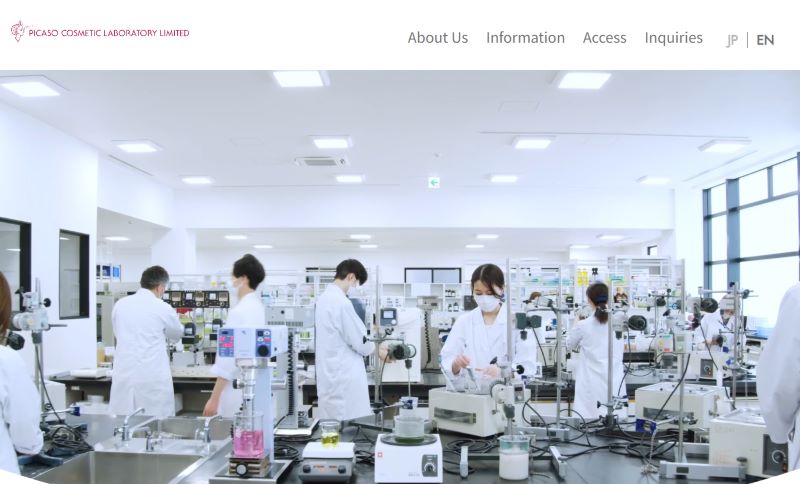
PICASO COSMETIC LABORATORY is a leading Japanese private label cosmetics manufacturer specializing in skincare products. Drawing on 200,000 formulation data points*1 and over 72 patented ingredients*2, PICASO proposes differentiated products focused on the skin-enhancing benefits associated with Japanese brands.
PICASO can develop ingredients derived from uniquely Japanese sustainable upcycled materials, as well as ingredients that leverage materials such as matcha and sake. The company offers end-to-end turnkey services, covering everything from ingredient selection through product storytelling designed with market communication in mind.
SOUTH KOREA
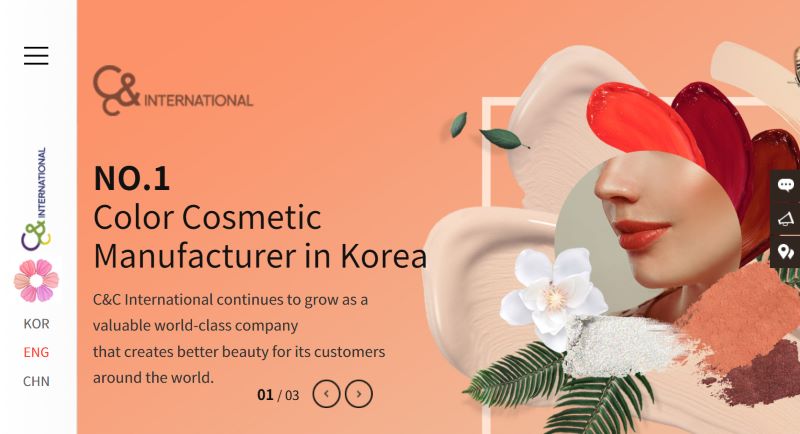
C&C International is a leading Korean cosmetics manufacturer for color cosmetics. The company creates new textures based on data accumulated through its leadership in K-beauty, combined with the development capabilities of its research team. C&C proposes products that anticipate upcoming trends.
Development With a prototyping system and production capability built on accumulated color and texture data, C&C can efficiently develop multi-color variations suited to diverse skin tones, as well as derivative lines featuring different textures.
ITALY
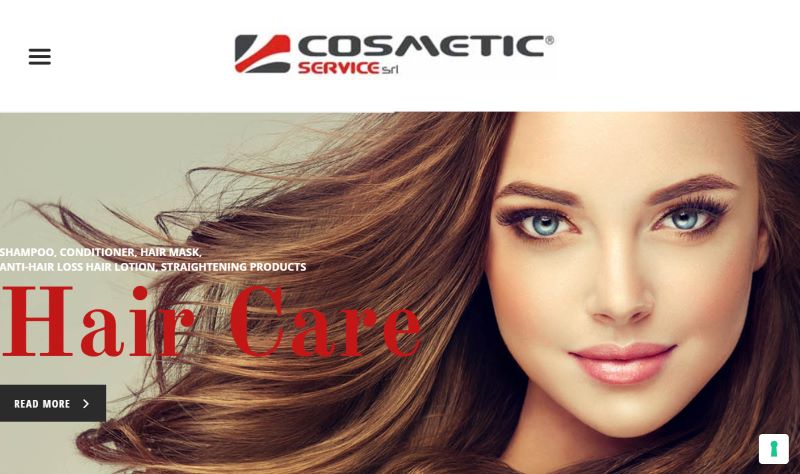
COSMETIC SERVICE is a full-service Italian private label cosmetics manufacturer specializing in hair care development. While meeting Italy’s high standards for organic practices and sustainability, the company designs formulations from the ground up, tailored to specific needs such as scalp care and damage repair.
COSMETIC SERVICE provides integrated support covering everything from container materials and graphic design to fragrance development. By integrating the brand’s world into the product’s appearance, texture, and scent, the company can create a memorable brand experience.