
Global Cosmetics ODM
A hero ingredient works best as the proof behind a promise, not as the promise itself. Start with the skin problem your customer wants solved, then choose an ingredient that you can formulate, source, and substantiate for that problem.
Hero-ingredient launches can break at four points: the ingredient is chosen for trend value, the formula carries too little of it to matter, the line expands before the hero sells, or the claims outrun the evidence.
The hero product is the item your brand is known for and sells most. The hero ingredient is the component that gives customers a reason to believe that product works. Customers buy the product and the result. The ingredient explains why they should expect that result.
This distinction shapes the whole line. A brand anchored to a problem, such as dehydrated skin that feels tight by midday, can change or upgrade its ingredient as science and supply change. A brand anchored only to an ingredient name has little left to stand on once competitors adopt the same ingredient.
Score every candidate against the same six questions. An ingredient that fails on formulation or supply usually costs more to fix after launch than to drop now.
| Check | Question to answer | Red flag |
|---|---|---|
| Problem fit | Does it address the concern your customer describes in their own words? | It was chosen because it is trending, and the customer problem was defined afterward. |
| Evidence | What supplier data or published research exists, and at what use level and test conditions? | The benefit only appears at a level you cannot afford or cannot formulate safely. |
| Perceived result | Can customers see or feel a difference within a few weeks of normal use? | The benefit can only be measured in a lab, so customers have no reason to reorder. |
| Formulation feasibility | How does it behave with light, air, heat, pH, other ingredients, and packaging materials? Does it affect color, odor, or skin feel? | It needs conditions that conflict with the texture or format your customer expects. |
| Supply and cost | How many suppliers offer a suitable grade, and how stable are price and lead time? | One supplier, no approved alternative, and no contract terms for price changes or discontinuation. |
| Distinctiveness | Do leading competitors already use the same ingredient at a similar level? | Nothing else in the product separates it from those competitors. |
Widely used actives can still anchor a line when the formula, texture, or evidence gives customers a better experience than competing products. For ways to build that difference, see Differentiation Strategy for Skincare Brands.
The formula around the ingredient decides whether customers experience its benefit. A strong hero product settles five design questions before the first sample.
Every product added after the hero should either reinforce the hero's promise or complete the routine around it. Give each SKU one of the roles below before development starts.
| Role | What it does | Does it need the hero ingredient? |
|---|---|---|
| Hero product | Carries the main promise and the most evidence | Yes, at a meaningful use level |
| Reinforcing product | Delivers the same promise in another step, format, or body area, such as a lighter daytime version | Usually yes, with its own formulation and testing |
| Routine-completing product | Fills a gap customers ask about, such as a gentle cleanser or basic moisturizer that works well with the hero | Not necessarily. It supports the hero instead of repeating it. |
For routine-completing products, a qualified stock formula can save development time and budget. See Private Label Skincare vs. Custom Skincare Formulation to decide which SKUs need custom development.
The ingredient list gives customers a partial view of how much of the hero is present. Under FDA labeling rules, ingredients above 1% must be listed in descending order of predominance, while ingredients at 1% or less may follow in any order. Shoppers who read ingredient lists can see whether a featured ingredient sits among the major components.
The product name counts as labeling, too. FDA treats a cosmetic as misbranded if its labeling is false or misleading, and its regulations state that naming a multi-ingredient product after one or more, but not all, of its ingredients may be misleading. Before naming a product after its hero, confirm that the formula supports the impression the name creates.
Advertising adds a separate test. FTC policy requires a reasonable basis for objective claims before an ad runs, for implied claims as well as express ones. If an ad says "clinically proven" or "tests show," the brand needs at least that level of support. Marketing a product as "powered by" an ingredient can imply that the ingredient is present in an amount that delivers the benefit.
Raw-material studies show how the ingredient performed at a stated level, in a stated base, under the supplier's test conditions.
They can guide your use level and claim direction. They do not prove that your finished product delivers the same result, so calling your product "clinically proven" on the strength of supplier studies claims support you may not have.
Claims about what your product does need support that fits your formula, package, and wording, such as consumer-use or instrumental testing on the final product.
Plan these tests during development so the launch copy does not wait on them.
Some popular hero ingredients also sit close to the cosmetic/drug line. FDA classifies products by intended use, so positioning an ingredient to treat acne or to provide sun protection makes the product a drug, with different requirements. For a table of common claim types and what to confirm, see Differentiation Strategy for Skincare Brands.
A line built on one ingredient depends on the manufacturer's ability to source it, formulate it, and keep it consistent across reorders. Put these questions in writing before you approve samples.
If the manufacturer cannot explain how it would replace the hero ingredient's supply, treat that as a launch risk, not a detail. A shortage of the hero ingredient can stop every product that contains it.
To compare manufacturers side by side, start with the skincare ODM and private label manufacturer list. For stage-by-stage timing, see the cosmetics product development process.
No single percentage applies to every ingredient. The right level depends on the evidence available, the format, safety data, and cost. Ask your formulator for an evidence-based range. Ingredients above 1% appear in descending order on the label, so the hero's position tells informed shoppers something about its level.
No. Reinforcing products usually carry it, while routine-completing products can support the hero without it. A focused line is easier to explain than one where every product lists the same ingredient.
Yes, if a stock formula already contains the ingredient at a level that supports your claims. Confirm the level, the available test data, and whether other brands sell the same formula. Once demand is proven, the hero can move to a custom formula.
Only under the ingredient supplier's terms. Ask the supplier in writing whether its trademark may appear on your label and in advertising, and which usage rules apply.
Cost depends on the route, raw-material price, testing scope, packaging, and order quantity. The cosmetic manufacturing cost guide breaks down the main cost areas to compare in quotes.
Choose the problem, prove the ingredient, perfect one hero, then expand. Drop any candidate that fails on formulation or supply, set the use level from evidence, and add products only when customers ask for the next step.
Compare skincare ODM and private label manufacturers by formulation experience and testing capability. Then send each one the same brief, with your hero ingredient, target use level, and planned claims.
Find Your Match
To identify proven private label cosmetic manufacturers, this article examined 115 exhibitors at MakeUp in New York in 2025*, a global trade show where cosmetic trends and technologies from around the world converge. Here, we present a detailed overview of three carefully selected manufacturing partners that operate as full-service turnkey providers, backed by extensive expertise and unique technologies not found elsewhere.
*Source: MakeUp in New York Official Website | As of survey conducted in December 2025 (https://www.makeup-in-newyork.com/en/exhibitors)
Advertiser Disclosure:
We receive compensation from some of the companies listed below.This compensation may affect which companies are included and the order in which they appear.
JAPAN
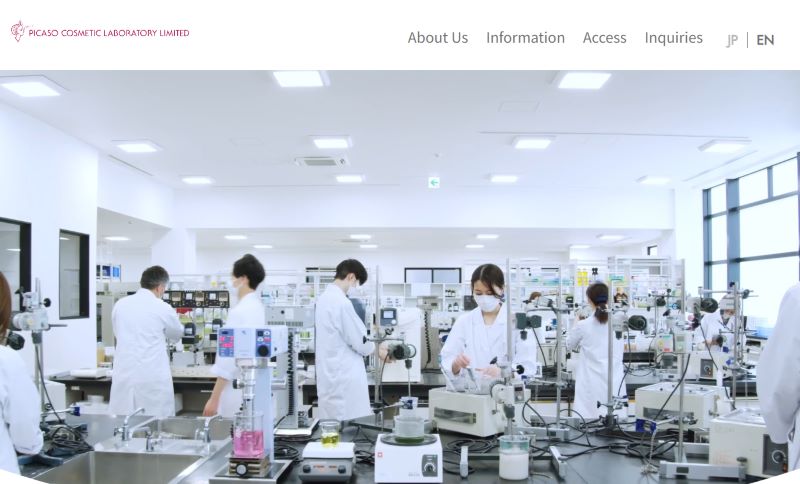
PICASO COSMETIC LABORATORY is a leading Japanese private label cosmetics manufacturer specializing in skincare products. Drawing on 200,000 formulation data points*1 and over 72 patented ingredients*2, PICASO proposes differentiated products focused on the skin-enhancing benefits associated with Japanese brands.
PICASO can develop ingredients derived from uniquely Japanese sustainable upcycled materials, as well as ingredients that leverage materials such as matcha and sake. The company offers end-to-end turnkey services, covering everything from ingredient selection through product storytelling designed with market communication in mind.
SOUTH KOREA
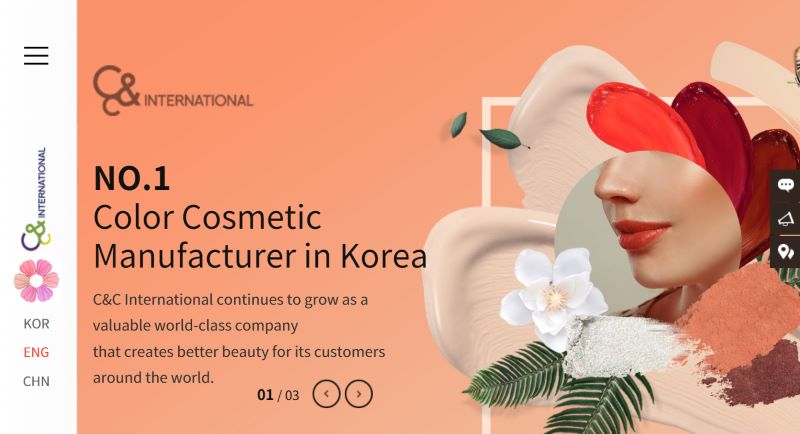
C&C International is a leading Korean cosmetics manufacturer for color cosmetics. The company creates new textures based on data accumulated through its leadership in K-beauty, combined with the development capabilities of its research team. C&C proposes products that anticipate upcoming trends.
Development With a prototyping system and production capability built on accumulated color and texture data, C&C can efficiently develop multi-color variations suited to diverse skin tones, as well as derivative lines featuring different textures.
ITALY
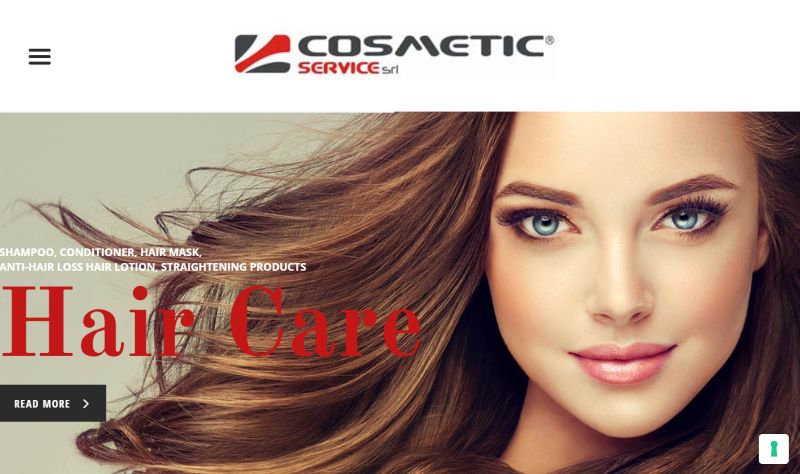
COSMETIC SERVICE is a full-service Italian private label cosmetics manufacturer specializing in hair care development. While meeting Italy’s high standards for organic practices and sustainability, the company designs formulations from the ground up, tailored to specific needs such as scalp care and damage repair.
COSMETIC SERVICE provides integrated support covering everything from container materials and graphic design to fragrance development. By integrating the brand’s world into the product’s appearance, texture, and scent, the company can create a memorable brand experience.