
Global Cosmetics ODM
The skincare differentiation that lasts is usually built into the product: its formula, texture, and proof. Positioning, packaging, and influencer campaigns alone are the easiest parts to copy.
Anyone can now launch a serum using a stock formula and a familiar hero ingredient. So the brands that stand out make two decisions early. They pick one reason to buy that customers can feel or verify, and they pick a manufacturing route and ODM partner that can deliver it.
Many new skincare brands draw from the same pool of stock formulas. Private label catalogs let a brand go to market without developing a formula, and one formula can often be sold to several brands under different names and labels.
The ingredient story is often shared too. Hyaluronic acid, niacinamide, retinol, and vitamin C appear across mass, prestige, and indie shelves, so leading with one of them rarely separates a new product from established ones.
Claim language converges as well. "Hydrating," "clean," "gentle," and "dermatologist-inspired" appear so often that customers stop treating them as reasons to choose.
That sameness is expensive because skincare customers do not switch lightly. SKIM research reported that 50–60% of skincare consumers remain loyal to their favorite brands, and loyalty rises to 60% among Gen Z. A new brand has to give those customers a concrete reason to try something else.
Each lever gets built in a different place and takes a different amount of effort for competitors to match. Use the table to see which levers depend on your manufacturer and which ones your brand team controls.
| Lever | What it looks like | How hard to copy | Where it gets built |
|---|---|---|---|
| 1. Target concern and customer | A narrow skin concern, life stage, climate, or routine, such as barrier care for people who react to fragrance | Low on its own. A competitor can adopt the same niche with new copy unless the product delivers something specific to it. | Brand strategy |
| 2. Formulation and ingredient technology | Proprietary or patented ingredients, uncommon ingredient combinations, or a delivery approach built for the target concern | High when the ingredient or formula is proprietary to the manufacturer or exclusive to your brand under contract | Manufacturer's lab and your supply agreement |
| 3. Texture, sensory feel, and format | Skin feel, absorption, finish, scent, and format, such as a balm, stick, or gel that changes texture on the skin | Medium to high. Customers notice it on first use, and reproducing it takes formulation work. | Manufacturer's lab and packaging development |
| 4. Proof and transparency | Safety and efficacy testing, consumer-perception studies, and clear ingredient explanations | Medium. Competitors can match it only by running their own studies, which takes time and budget. | Manufacturer's testing, third-party labs, and brand content |
| 5. Story, origin, and community | Founder expertise, a Japanese or Korean formulation heritage, a professional channel, or an engaged community | Varies widely. Real expertise and a real community are hard to copy, but a generic founder story is easy to imitate. | Brand and marketing team, plus your choice of manufacturer |
Levers 2 through 4 live inside the product, and customers appear willing to pay for them. SKIM found that an advantage in innovation increased willingness to pay a premium by almost twice as much as an equal advantage in perceived brand "premiumness."
If a competitor could match your differentiator by rewriting their label, it is positioning, not product differentiation. Positioning still matters, but it needs a product difference behind it before you put money into a launch.
The route you develop through sets which levers are available to you. Choose the differentiation angle first, then pick the route that can deliver it.
| Route | What the brand can usually change | Levers it supports | What to confirm |
|---|---|---|---|
| Stock private label | Brand name, label, package selection, price, and sales channel | Mainly target customer and story (levers 1 and 5), with limited sensory difference through packaging | Whether the same formula is sold to other brands, and whether any exclusivity is available |
| Semi-custom (adapted base) | Changes the manufacturer permits to an existing base, such as fragrance, color, texture adjustments, or added ingredients | Partial texture and ingredient differences (levers 2 and 3) | Whether the changes make existing stability or safety data inapplicable, and whether the adapted base stays available to other brands |
| Custom formulation | A formula developed from your brief for ingredients, texture, scent, package, and performance direction | Product-level differentiation across levers 2, 3, and 4 | Development timeline, testing scope, minimum order quantity, and who owns or can transfer the formula |
One option is to split the line: custom-develop the hero product that carries the main differentiator and use qualified stock formulas for supporting products such as cleansers. For a fuller breakdown of the two routes, see Private Label Skincare vs. Custom Skincare Formulation. To estimate the budget side, see the cosmetic manufacturing cost guide.
Levers 2 through 4 depend on what the ODM can actually do. Check each capability below against the lever you chose before you request a quote.
Ask for evidence, not descriptions. Request sample formulas close to your brief, a list of proprietary materials your brand can use, and the test reports behind them. Then compare manufacturers on what they can show, not on what their capability pages promise.
Under U.S. law, a product's intended use determines whether it is a cosmetic or a drug. FDA looks at the claims in labeling, advertising, and online content, at consumer perception, and at ingredients with a well-known therapeutic use. A bold differentiating claim can move a cosmetic into drug territory. Claims to treat acne, regenerate cells, or affect melanin production are examples FDA lists.
The FTC adds a separate requirement: advertisers must have adequate substantiation for objective claims before the ad runs. This covers implied claims as well as stated ones. Under MoCRA, the responsible person must also ensure and maintain records supporting adequate safety substantiation of each cosmetic product.
| Claim type | Example | What to confirm |
|---|---|---|
| Sensory or texture | "Absorbs in seconds," "non-greasy finish" | Objective wording still needs support, such as a consumer-use test on the final formula and package. |
| Appearance | "Skin looks smoother after two weeks" | Test method, sample size, and timeframe must match the exact wording. |
| Treatment or body function | "Treats acne," "regenerates cells" | These describe drug uses. Rewrite them, or plan for drug requirements instead of cosmetic ones. |
| Ingredient or technology | "With a patented ingredient," "free of fragrance" | Patent status, ingredient source, and formula accuracy must be documented, including after any raw-material change. |
| Comparative | "Twice as hydrating as the leading brand" | Head-to-head evidence against a named or clearly identifiable competitor. |
Yes. It can compete on a specific customer, founder expertise, a professional channel, packaging, and service. The formula may be available to other brands, though, so plan a custom or semi-custom hero product once sales show what customers want improved.
Only when customers can see or feel its effect and competitors cannot buy the same ingredient easily. Widely available actives are easy to copy. Proprietary materials and the way a formula delivers the experience are harder to reproduce.
A combination: a formula or ingredient that is exclusive under contract, a texture customers recognize, and test data behind the claims. Any single element is easier to match than all three together.
Costs depend on the route, testing scope, packaging, and order quantities. The cosmetic manufacturing cost guide breaks down the main cost areas to compare in quotes.
Decide what customers should notice first, then choose the route and manufacturer that can deliver it. Write that difference into the brief as a testable requirement, and confirm exclusivity and claim support before you commit to a first order.
Compare skincare ODM and private label manufacturers by formulation strength and testing capability. Then send each one the same brief with your primary and supporting levers.
Find Your Match
To identify proven private label cosmetic manufacturers, this article examined 115 exhibitors at MakeUp in New York in 2025*, a global trade show where cosmetic trends and technologies from around the world converge. Here, we present a detailed overview of three carefully selected manufacturing partners that operate as full-service turnkey providers, backed by extensive expertise and unique technologies not found elsewhere.
*Source: MakeUp in New York Official Website | As of survey conducted in December 2025 (https://www.makeup-in-newyork.com/en/exhibitors)
Advertiser Disclosure:
We receive compensation from some of the companies listed below.This compensation may affect which companies are included and the order in which they appear.
JAPAN
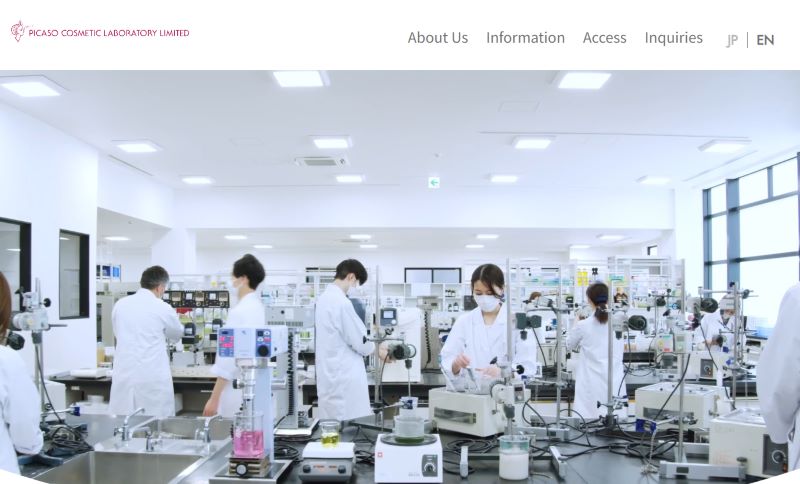
PICASO COSMETIC LABORATORY is a leading Japanese private label cosmetics manufacturer specializing in skincare products. Drawing on 200,000 formulation data points*1 and over 72 patented ingredients*2, PICASO proposes differentiated products focused on the skin-enhancing benefits associated with Japanese brands.
PICASO can develop ingredients derived from uniquely Japanese sustainable upcycled materials, as well as ingredients that leverage materials such as matcha and sake. The company offers end-to-end turnkey services, covering everything from ingredient selection through product storytelling designed with market communication in mind.
SOUTH KOREA
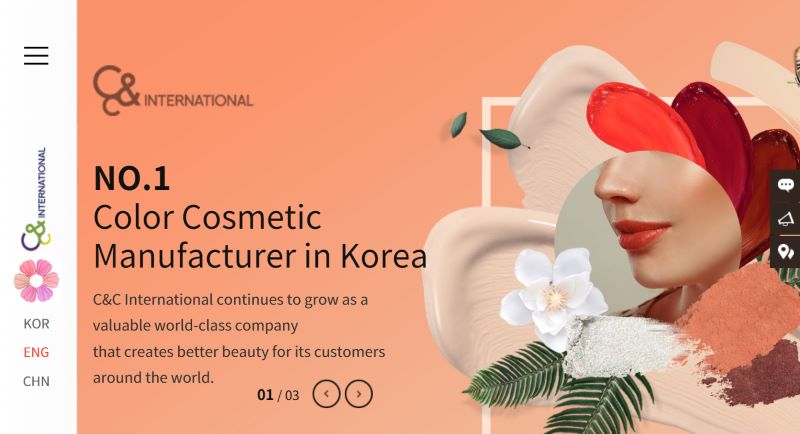
C&C International is a leading Korean cosmetics manufacturer for color cosmetics. The company creates new textures based on data accumulated through its leadership in K-beauty, combined with the development capabilities of its research team. C&C proposes products that anticipate upcoming trends.
Development With a prototyping system and production capability built on accumulated color and texture data, C&C can efficiently develop multi-color variations suited to diverse skin tones, as well as derivative lines featuring different textures.
ITALY
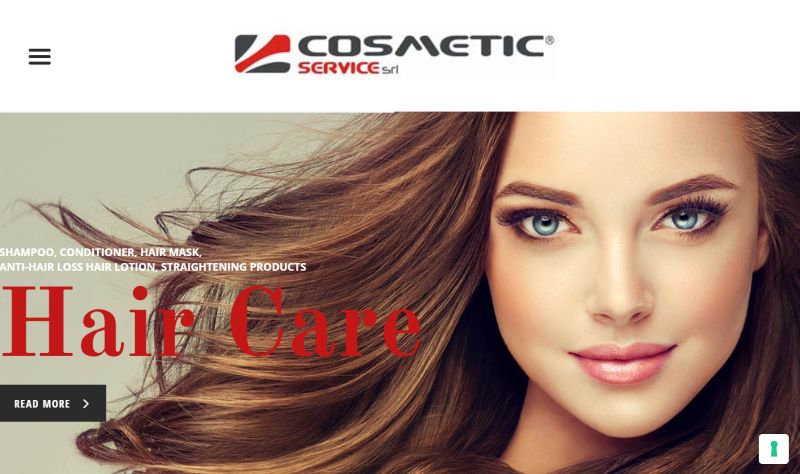
COSMETIC SERVICE is a full-service Italian private label cosmetics manufacturer specializing in hair care development. While meeting Italy’s high standards for organic practices and sustainability, the company designs formulations from the ground up, tailored to specific needs such as scalp care and damage repair.
COSMETIC SERVICE provides integrated support covering everything from container materials and graphic design to fragrance development. By integrating the brand’s world into the product’s appearance, texture, and scent, the company can create a memorable brand experience.