
Global Cosmetics ODM
K-beauty wins customers through discovery. A cushion compact that gave base makeup a new format. A serum texture that looks irresistible on camera. A price low enough to try on impulse. K-beauty turns skincare into something shoppers want to explore, share, and try again.
Behind that energy is a manufacturing ecosystem built for speed, where small brands can launch in months. For a private label, that speed is both the opportunity and the risk. The same system that lets you launch quickly lets competitors copy you quickly, so the line needs a reason to be reordered after the trend moves on.
K-beauty has a track record of creating products people had not seen before, then making them easy to try. Four qualities come up again and again in how shoppers and retailers describe it.
Amorepacific, which credits itself with creating the cushion category, released IOPE Air Cushion Sunblock in 2008. By the third quarter of 2016, its cushion products had passed 100 million units in cumulative sales.
K-beauty's reputation rests on moments like this: a format that changes a routine, not only a new formula inside a familiar bottle.
Bouncy gels, glossy essences, jelly masks, and toner pads look distinctive in a close-up video. Ingredient stories such as centella, snail mucin, and rice give shoppers something specific to search for.
That visual quality helps K-beauty spread through creator content, where shoppers see a product before they ever touch it.
Indie K-beauty brands have grown by offering what one analysis calls "prestige quality at mass prices."
A lower price invites trial, and trial matters in a category where shoppers like to compare products for themselves.
Layering toners, essences, serums, and masks turns a routine into a hobby that can be customized and shared. Routine content, such as #skincareroutine videos, is part of how K-beauty reaches new buyers.
Each step is a chance for a shopper to try one more product.
K-beauty's appeal is visible, so show it honestly. Let the texture, format, and price do the work on camera. Any result a video implies, such as smoother-looking skin, still needs support from the finished product.
Both are Asian skincare traditions with strong reputations abroad, but they reward different business models. The choice affects how often you launch, how you price, and where you sell.
| Factor | K-beauty | J-beauty |
|---|---|---|
| What customers come for | Novelty, visible textures, and value | Refinement, comfort, and consistency |
| Launch rhythm | Frequent launches that follow trends | Fewer launches, refined over time |
| Where discovery happens | Creator content, TikTok Shop, and online marketplaces | Word of mouth, travel, and long-standing brands |
| Main risk for a new brand | Fast imitation and short product cycles | Low category awareness in the U.S. |
| What keeps customers | A hero product worth reordering after the trend | A daily product that feels the same in every reorder |
Choose K-beauty positioning when your plan depends on newness, trial, and content. For the J-beauty side of this comparison, see J-Beauty Private Label: What International Shoppers Want From Japanese Skincare.
Korea is now the world's second-largest cosmetics exporter. According to Ministry of Food and Drug Safety data reported in May 2026, Korean cosmetics exports rose 11.8% to $11.4 billion in 2025, behind France ($24.3 billion) and ahead of the U.S. ($10.8 billion). Korean cosmetics reached 202 countries, up from 172 the year before.
The U.S. became Korea's largest export destination for the first time, at $2.2 billion, or 19.1% of the total. On the U.S. side, NielsenIQ reported K-beauty sales of about $2 billion, up 37% year over year, with 70% of sales happening online.
Retail has followed. NielsenIQ noted that Ulta and Sephora expanded their K-beauty selections, Costco.com carries more than 50 K-beauty brands, and Olive Young planned a Los Angeles store for 2026.
In the U.S., "K-beauty" is already a recognized shelf label, so the category name alone will not set you apart. A K-beauty private label enters a crowded, fast-moving space and needs a sharper reason to choose it than its origin.
NielsenIQ identifies the core of K-beauty's U.S. growth, and retail expansion shows how far it has spread. The evidence column shows how firmly each segment is supported.
| Segment | Observable signal | What they value | Evidence |
|---|---|---|---|
| High-income Asian American Millennials | NielsenIQ names this group as the primary demographic driving K-beauty growth | Efficacy, ingredient knowledge, and value | High. Retail measurement data |
| Gen Z and Millennial social shoppers | The trend resonates strongly with both generations, and TikTok Shop works as a marketing engine through creators and routine hashtags | Discovery, visible textures, and shareable routines | Medium to high. Retail measurement and channel data |
| Value-seeking prestige shoppers | Indie brands grow on "prestige quality at mass prices," and warehouse clubs now carry dozens of K-beauty brands | Premium feel without a premium price | Medium. Industry analysis and retail assortment |
| Mainstream beauty retail shoppers | Ulta and Sephora have expanded K-beauty selections | Convenience and trusted retail curation | Medium. Shows reach, not buyer profiles |
NielsenIQ also notes that K-beauty is expanding beyond its core buyers. The broader audience makes the category bigger, and it also makes competition for attention tougher.
Skincare shoppers tend to stay loyal. SKIM research reported that 50–60% of skincare consumers remain loyal to their favorite brands. Yet K-beauty's growth has been driven by new and indie brands discovered online. Shoppers who stick with what works still keep adding new K-beauty products, and that tension is worth understanding.
Shoppers may stay loyal to their routine rather than to a brand. Trying a new K-beauty product is a low-risk way to refresh one step of that routine and take part in what others are talking about.
If this holds, a K-beauty private label wins the first purchase through discovery and price. It wins the second by becoming the product that owns a step.
Treat this as a hypothesis to test, not a proven fact. Track what share of first-time buyers reorder, read reviews for words such as "repurchase" or "holy grail," and compare how trial-size buyers behave with full-size buyers.
If the hypothesis holds, design every hero product for two moments: an easy, visible first try and a clear reason to reorder.
Most of K-beauty's creativity can be built into a U.S. cosmetic. Sunscreens, functional cosmetics, and cross-border shipping need a different plan.
| Element | Carries over? | What to check |
|---|---|---|
| New formats and textures | Yes | Confirm component supply, package compatibility, and whether a format depends on a patented component. |
| Trend ingredients such as centella, snail mucin, and rice | Yes, as cosmetic ingredients | FDA does not pre-approve cosmetic ingredients, except some color additives. The product must still be safe, avoid prohibited ingredients, and have safety substantiation records under MoCRA. Use INCI names, and keep sourcing and ingredient claims accurate. |
| Sunscreen | Not as-is | In the U.S., sunscreens are OTC drugs. Products under the FDA sunscreen monograph may use only its listed active ingredients, which added bemotrizinol at up to 6% by a final order effective August 9, 2026. Labels use SPF and "Broad Spectrum" designations rather than PA grades. |
| Korean "functional cosmetics" (whitening, wrinkle improvement) | Not as-is | Korea regulates these through a functional cosmetics system, with MFDS evaluation or reporting, that has no U.S. equivalent. Claims to affect melanin production are drug claims under FDA rules. Keep wrinkle wording on appearance, such as "reduces the look of fine lines," and have it reviewed. |
| Korean origin | Yes, when true | Imported products must be marked with their country of origin. Presenting a product made elsewhere as K-beauty can mislead buyers. |
| Shipping direct to U.S. consumers from Korea | Costs changed | Duty-free de minimis treatment for low-value shipments was suspended for all countries on August 29, 2025. Confirm current duties and landed cost with a licensed customs broker before setting prices. |
Plan for the trial and the reorder from the start. The first purchase comes from discovery. The brand survives on the second.
For choosing and formulating the hero ingredient, see How to Develop a Skincare Line Around a Hero Ingredient. For ways to make the line harder to copy, see Differentiation Strategy for Skincare Brands.
Korean ODMs let a brand start small and move fast. One analysis describes startups ordering batches of as few as 1,000 units and developing products in less than six months. Use that flexibility, and protect yourself from its downside, by confirming these points before you request samples.
In a fast ecosystem, exclusivity is part of your differentiation. If a competitor can buy the same base formula next month, your advantage has to come from the hero product's brief, the brand, and the reorder experience.
Compare manufacturers in the skincare ODM and private label manufacturer list. If you are still deciding between countries, see Korean vs. Japanese Skincare Manufacturers.
"K-beauty" is a marketing term, but shoppers read it as a signal of Korean origin. Manufacturing in Korea keeps the story truthful. If any part is made elsewhere, describe the origin accurately and have the wording reviewed.
Only if it is reformulated or confirmed to meet U.S. OTC sunscreen requirements, including the permitted active ingredients, concentrations, and label format. A formula approved in Korea is not automatically compliant in the U.S.
FDA does not pre-approve cosmetic ingredients, except some color additives. The finished product must be safe, properly labeled, free of prohibited ingredients, and backed by safety substantiation records. Claims about what the ingredient does still need support.
Timelines depend on whether you start from an existing formula, how many revisions you need, and your testing and packaging. Korean ODMs are known for speed, with some products developed in less than six months, but U.S. compliance work and shipping add time.
You cannot stop every imitation, but you can make it harder. Secure formula exclusivity in writing, build the brand around one hero product, and give customers reasons to reorder that a copy cannot replicate overnight.
Build a K-beauty private label around one hero product that is easy to discover and worth reordering, made by a Korean manufacturer that can support U.S. rules and exclusivity. Let the format, texture, and price win the first try, then let performance and routine fit win the reorder. Keep sunscreen and whitening claims out of the first launch unless you have planned for their separate requirements.
Compare skincare manufacturers by formulation speed, exclusivity terms, U.S. launch experience, and MOQ. Then send each one the same brief with your hero product, texture targets, and planned claims.
Find Your Match
To identify proven private label cosmetic manufacturers, this article examined 115 exhibitors at MakeUp in New York in 2025*, a global trade show where cosmetic trends and technologies from around the world converge. Here, we present a detailed overview of three carefully selected manufacturing partners that operate as full-service turnkey providers, backed by extensive expertise and unique technologies not found elsewhere.
*Source: MakeUp in New York Official Website | As of survey conducted in December 2025 (https://www.makeup-in-newyork.com/en/exhibitors)
Advertiser Disclosure:
We receive compensation from some of the companies listed below.This compensation may affect which companies are included and the order in which they appear.
JAPAN
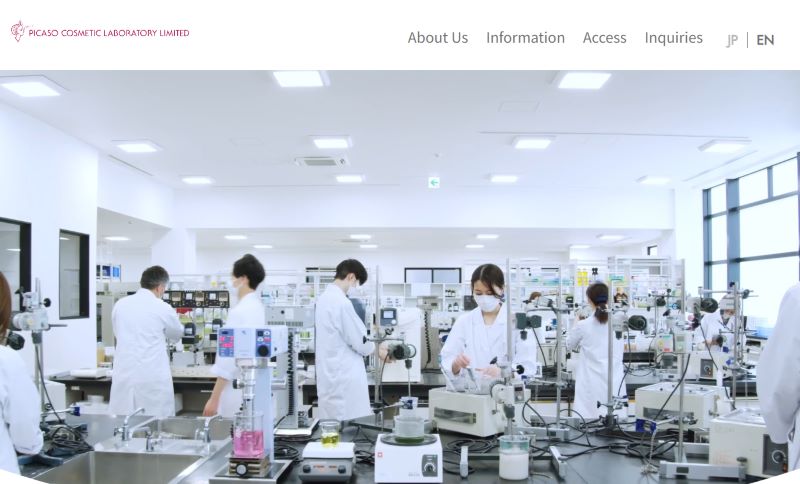
PICASO COSMETIC LABORATORY is a leading Japanese private label cosmetics manufacturer specializing in skincare products. Drawing on 200,000 formulation data points*1 and over 72 patented ingredients*2, PICASO proposes differentiated products focused on the skin-enhancing benefits associated with Japanese brands.
PICASO can develop ingredients derived from uniquely Japanese sustainable upcycled materials, as well as ingredients that leverage materials such as matcha and sake. The company offers end-to-end turnkey services, covering everything from ingredient selection through product storytelling designed with market communication in mind.
SOUTH KOREA
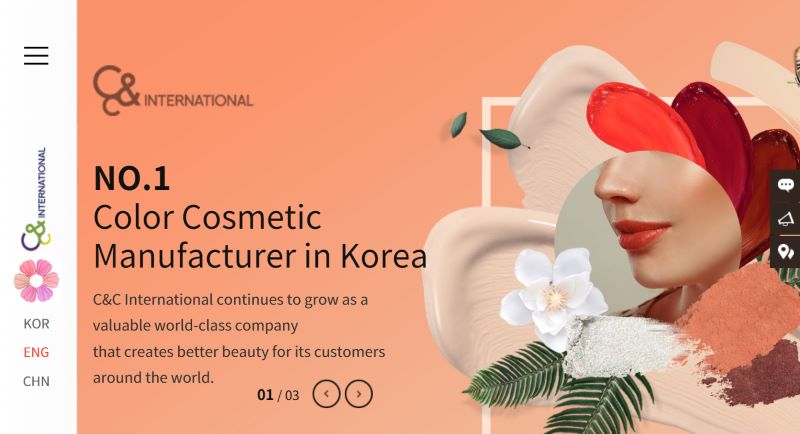
C&C International is a leading Korean cosmetics manufacturer for color cosmetics. The company creates new textures based on data accumulated through its leadership in K-beauty, combined with the development capabilities of its research team. C&C proposes products that anticipate upcoming trends.
Development With a prototyping system and production capability built on accumulated color and texture data, C&C can efficiently develop multi-color variations suited to diverse skin tones, as well as derivative lines featuring different textures.
ITALY
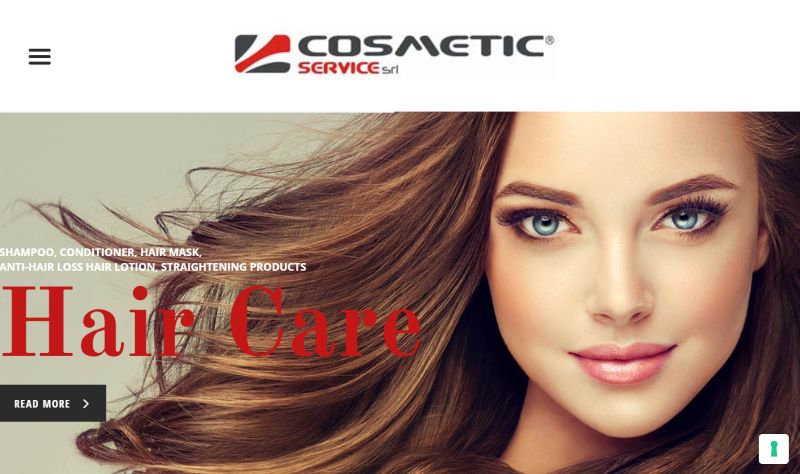
COSMETIC SERVICE is a full-service Italian private label cosmetics manufacturer specializing in hair care development. While meeting Italy’s high standards for organic practices and sustainability, the company designs formulations from the ground up, tailored to specific needs such as scalp care and damage repair.
COSMETIC SERVICE provides integrated support covering everything from container materials and graphic design to fragrance development. By integrating the brand’s world into the product’s appearance, texture, and scent, the company can create a memorable brand experience.