
Global Cosmetics ODM
Choose a fermented skincare manufacturer by how well it controls the ferment, not by how many fermented products it has made. A ferment filtrate or lysate is a complex mixture produced by microorganisms. Its color, scent, and composition depend on the strain, what it was grown on, and how it was processed. Your manufacturer has to document that ingredient, make every batch match the sample you approved, and protect the formula, which is usually water-based, from contamination.
Fermented launches can break at four points: the production batch doesn't match the sample, preservation is never tested, the brand depends on a ferment it can't take elsewhere, or the label promises live bacteria the bottle doesn't contain.
Where the ferment comes from decides how distinctive your formula can be, how much data you can get on it, and how easily you can switch manufacturers later.
| Route | What you get | What you give up | Choose it when |
|---|---|---|---|
| Manufacturer-developed ferment | An ingredient competitors can't order from a supplier catalog, plus the developer's own data on how it behaves in formulas | Portability. If only that manufacturer makes the ferment, moving production can mean reformulating. | The ferment is the main reason to buy your product, and you plan to stay with one manufacturer through several reorders. |
| Supplier ferment in a custom formula | Your own formula built on a ferment from an ingredient supplier, with the supplier's documentation and a choice of grades | Exclusivity. Other brands can buy the same grade, so your difference has to come from the rest of the formula. | You want a custom texture and the option to qualify a second manufacturer later. |
| Stock fermented formula | An existing, tested base you can launch faster and with lower development cost | Distinctiveness and claim data. Other brands may sell the same formula, and its test data may not fit your claims. | You need to test demand before paying for development, or the product supports a different hero. |
Many brands combine routes: a custom hero built on a distinctive ferment, with stock formulas for the supporting steps. To decide which products justify custom work, see Private Label Skincare vs. Custom Skincare Formulation. For how the ferment should earn its place in the line, see How to Develop a Skincare Line Around a Hero Ingredient.
Send every candidate the same six questions in writing. The answers show whether the manufacturer controls the ferment or simply receives it from a supplier and adds it.
| Check | What to ask | Red flag |
|---|---|---|
| Ferment documentation | Can you share the INCI name, microorganism, substrate, form (filtrate, lysate, or extract), any carriers or preservatives in the raw material, the specification sheet, and a certificate of analysis? | Only a trade name and a supplier name, with no specification or lot data. |
| Experience in your format | Which formats have you made with this ferment, and how did you manage its color, odor, and viscosity? | Every example comes from a different format, or from concept samples that never went into production. |
| Lot-to-lot consistency | How do you check incoming ferment lots? Which release specifications apply to the finished product? | Batches are released on a visual check, with no retained standard sample to compare against. |
| Preservation and microbial control | Which preservative efficacy (challenge) test will you run on the final formula, and what microbial testing happens before each batch ships? | The ferment is presented as the preservative, and no challenge test is planned. |
| Finished-product testing | Which stability, package compatibility, and safety tests can you run in-house, and which go to an outside lab? Can you measure claim-related results such as moisture or skin texture? | The only data covers the raw ferment, not your formula. |
| Quality system and U.S. readiness | Which GMP standard does the facility follow, such as ISO 22716? Is the facility registered with FDA, and which documents will you provide for your safety records? | No recent audit summary, or no clear answer on who handles which U.S. filings. |
Manufacturers that develop ferments in-house or keep large libraries of past formulas can often answer the first three checks with existing data. Others may have to request data from their suppliers, which adds time to sampling. To compare Japanese skincare ODMs by formulation records, proprietary ingredients, and quality control, see Japan Skincare ODM Manufacturers.
Each of these mistakes surfaces late, after samples are approved or a batch is filled, when the fix means reformulating or delaying the launch.
The lab sample was made with one lot of the ferment, and production uses another. Because fermentation output shifts with the strain, substrate, and process conditions, the new lot can make the product darker, give it a stronger fermented odor, or change its thickness. Without written limits, you have no basis for rejecting the batch.
How to avoid it: Approve a pilot or first production batch against the sample, keep a retained standard, and write acceptance ranges into the specification. A clause such as "Each batch must match the retained standard for appearance, color, and odor within the agreed range and meet the agreed pH, viscosity, and microbial limits before release" gives both sides the same test.
Fermentation produces organic acids, and some ferments are sold as preservative alternatives. Neither proves that your finished formula resists contamination. FDA lists an ineffective preservation system as a route to microbial contamination, especially with ingredients that encourage microbial growth. FDA also states that cosmetics must not be prepared, packed, or stored in a way that may have made them contaminated or harmful to health.
How to avoid it: Run a preservative efficacy test on the final formula in the final package before launch. Repeat it if the ferment grade, preservative system, or package changes.
A manufacturer's proprietary ferment can make your hero hard to copy. It can also tie every reorder to that manufacturer's pricing, minimums, and capacity, because no one else can supply the same ingredient.
How to avoid it: Before development starts, get written answers on who owns the formula, whether the ferment can be supplied to another manufacturer if you move production, and how much notice you get before it's discontinued. If the ferment can't move with you, weigh that dependency now instead of discovering it at the first reorder.
A manufacturer may switch the ferment's supplier, grade, or carrier to solve a cost or supply problem. Two ferments can share an INCI name and still behave differently, and the stability, safety, and claim data you paid for were generated with the original material. FTC guidance on health-related claims gives a parallel example: clinical trials on one botanical extract don't support a product made with a different extraction method that has a significantly different chemical profile.
How to avoid it: Add a change-control clause, such as "No change to the source, grade, supplier, or manufacturing process of [ferment] without the brand's prior written approval and agreed retesting." Ask the manufacturer to describe the last raw-material change it handled and how it notified the brand.
"Probiotic" tells shoppers the product contains live microorganisms, and claims about treating skin conditions can make a cosmetic a drug. Settle these words before artwork, because they also appear in the product name, front label, and ads.
The International Scientific Association for Probiotics and Prebiotics (ISAPP) defines probiotics as live microorganisms that confer a health benefit when given in adequate amounts. It defines postbiotics as preparations of inanimate microorganisms and/or their components that confer a health benefit on the host. A filtrate has the cells removed and a lysate is made from broken cells, so "probiotic" doesn't describe either one.
| Wording | What it signals | What to confirm first |
|---|---|---|
| "Probiotic," "live cultures" | The product contains live microorganisms that deliver a benefit | Whether any microorganisms are alive when the customer uses the product, and how safety and microbial limits are handled. If they aren't alive, name the form instead, such as "ferment filtrate" or "lysate." |
| "Postbiotic" | Inactivated microorganisms or their components with a demonstrated benefit | Evidence of the benefit in people, not only in a lab test, as the ISAPP definition requires. |
| "Microbiome-friendly," "supports the skin barrier" | A benefit to the skin's microbial balance or barrier | Wording reviewed against the cosmetic/drug line, plus testing on the finished product that supports the exact claim. |
| "Treats acne," "heals eczema" | A product intended to treat a disease | FDA classifies a product by its intended use, and a product intended to treat acne is regulated as a drug, or as both a drug and a cosmetic. Drop the claim unless the product meets the applicable drug requirements. |
| "Clinically proven," "tests show" | The finished product was tested and produced the stated result | A study on your formula. The FTC expects at least the level of support the ad claims, and a supplier's study on its ferment doesn't cover your finished product. |
On the ingredient list, each ferment appears under the name FDA's labeling rules require. Those rules point to recognized compendia, including the cosmetic ingredient dictionary behind today's INCI names, before allowing a consumer-recognized name. Ferment INCI names usually state the microorganism, the substrate, and the form, as in "Saccharomyces/Rice Ferment Filtrate" or "Galactomyces Ferment Filtrate." Get the declared name for every ferment in writing, and make sure front-label wording such as "rice ferment" matches it.
Under MoCRA, the responsible person is the manufacturer, packer, or distributor whose name appears on the label, which is usually your brand. The responsible person must keep records supporting the product's safety and list the product with FDA, including its ingredients. Manufacturing facilities must register with FDA, unless an exemption applies. Ask the manufacturer which ferment documents, safety data, and test reports it will hand over for your records.
For a custom formula, plan on a minimum somewhere between several hundred and a few thousand units per product, plus a development fee in the low thousands of dollars. Two published sets of terms show the spread:
A ferment can push both numbers up. The manufacturer may have to buy a less common ingredient in a larger quantity than one run uses, and testing costs stay the same whether the batch is small or large. Ask whether the ferment has its own purchase minimum and who pays for unused material, which tests the development fee covers, and whether a stock fermented base could lower the minimum for a first run. The cosmetic manufacturing cost guide lists the other cost areas to compare in quotes.
Only if challenge testing shows that the finished formula and package resist contamination without an added preservative. A ferment's organic acids don't guarantee that. If you use a ferment sold as a preservative alternative, it is doing a preservative's job, and "preservative-free" may mislead shoppers. Check the full composition too, because raw materials can carry their own preservatives.
If preservative-free is essential to the brand, ask the manufacturer which formula and package design could make it work, such as airless or single-dose packaging, and budget for repeat challenge tests. If it isn't essential, a conventional preservative system that passes testing is the faster route to launch.
You can ask, and a manufacturer that develops its own ferments is the most likely to agree, because it controls the ingredient. Exclusivity is a set of terms you negotiate, so get each one in writing:
Exclusivity is worth paying for when the ferment is your main point of difference and you expect to stay with the manufacturer through several reorders. If you expect to switch or add a second manufacturer, a supplier ferment in a formula you own keeps that option open.
Usually it already does. The label must use the ingredient's required name, and most ferment INCI names include the microorganism and the form, such as "Lactobacillus Ferment Lysate Filtrate." A consumer term such as "fermented rice water" can't replace that name on the ingredient list when a recognized dictionary name exists, though your marketing copy can describe the ferment in plain language if it matches.
The ingredient's position also tells shoppers something. Ingredients above 1% must appear in descending order of predominance, while those at 1% or less can follow in any order. If the ferment is your hero but sits near the end of the list, informed shoppers may read that as a low level.
Not by country alone. Fermented ingredients are closely tied to both J-beauty and K-beauty, but the advantage belongs to the specific factory that can document its ferment, keep lots consistent, and test your finished product. Check ferment documentation, lot consistency, preservation, and finished-product testing for every candidate, wherever it is located.
Country affects the rest of the project: shipping time, import costs, time zones, and how the manufacturer supports U.S. compliance. If you need fast format iteration, prioritize how quickly the manufacturer turns around samples. If you plan one hero formula that must stay the same across years of reorders, put change control and lot consistency first. Korean Skincare Manufacturer vs. Japanese Skincare Manufacturer compares the two in more detail.
Shortlist only manufacturers that can document the ferment, hold production to your approved standard, and test your finished product. Then choose between a proprietary ferment and a portable one based on how long you expect to stay with the manufacturer, and settle your claim wording before artwork.
Compare skincare ODM and private label manufacturers by ingredient development, testing capability, and minimums. Then send each one the same brief, with your ferment preference, acceptable color and scent range, and planned claims.
Find Your Match
To identify proven private label cosmetic manufacturers, this article examined 115 exhibitors at MakeUp in New York in 2025*, a global trade show where cosmetic trends and technologies from around the world converge. Here, we present a detailed overview of three carefully selected manufacturing partners that operate as full-service turnkey providers, backed by extensive expertise and unique technologies not found elsewhere.
*Source: MakeUp in New York Official Website | As of survey conducted in December 2025 (https://www.makeup-in-newyork.com/en/exhibitors)
Advertiser Disclosure:
We receive compensation from some of the companies listed below.This compensation may affect which companies are included and the order in which they appear.
JAPAN
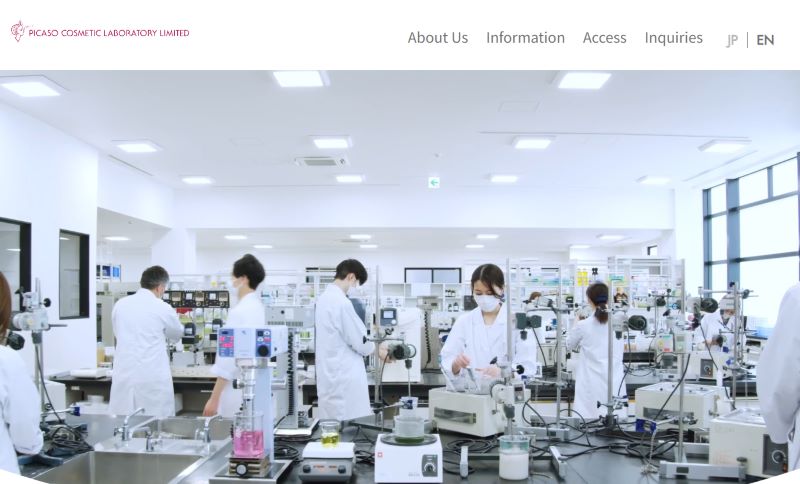
PICASO COSMETIC LABORATORY is a leading Japanese private label cosmetics manufacturer specializing in skincare products. Drawing on 200,000 formulation data points*1 and over 72 patented ingredients*2, PICASO proposes differentiated products focused on the skin-enhancing benefits associated with Japanese brands.
PICASO can develop ingredients derived from uniquely Japanese sustainable upcycled materials, as well as ingredients that leverage materials such as matcha and sake. The company offers end-to-end turnkey services, covering everything from ingredient selection through product storytelling designed with market communication in mind.
SOUTH KOREA
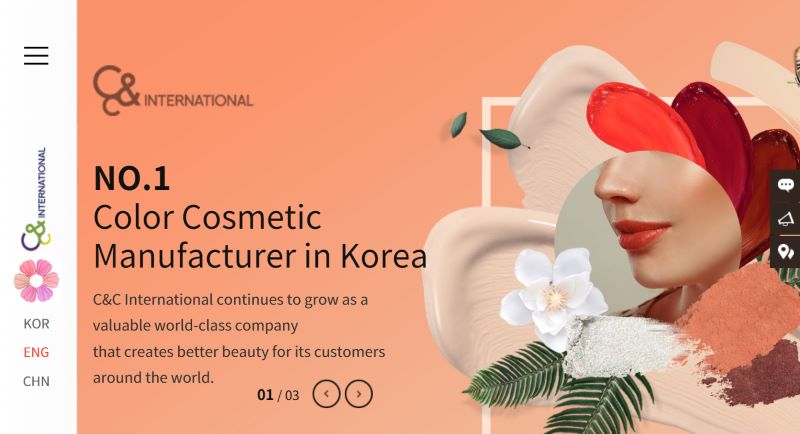
C&C International is a leading Korean cosmetics manufacturer for color cosmetics. The company creates new textures based on data accumulated through its leadership in K-beauty, combined with the development capabilities of its research team. C&C proposes products that anticipate upcoming trends.
Development With a prototyping system and production capability built on accumulated color and texture data, C&C can efficiently develop multi-color variations suited to diverse skin tones, as well as derivative lines featuring different textures.
ITALY
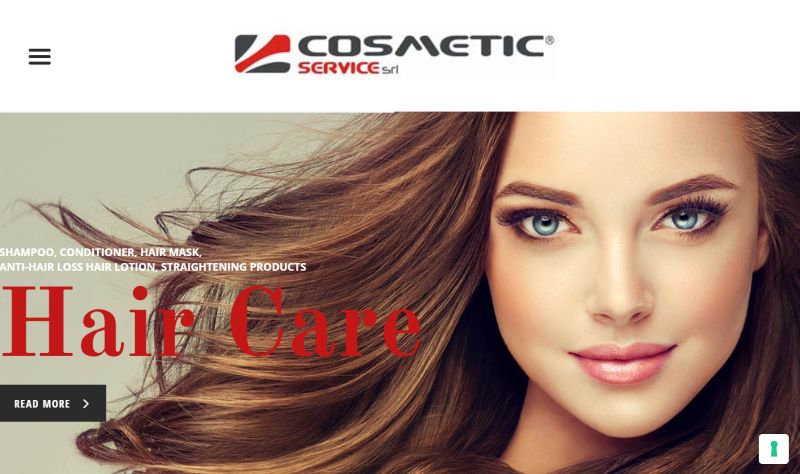
COSMETIC SERVICE is a full-service Italian private label cosmetics manufacturer specializing in hair care development. While meeting Italy’s high standards for organic practices and sustainability, the company designs formulations from the ground up, tailored to specific needs such as scalp care and damage repair.
COSMETIC SERVICE provides integrated support covering everything from container materials and graphic design to fragrance development. By integrating the brand’s world into the product’s appearance, texture, and scent, the company can create a memorable brand experience.