
Global Cosmetics ODM
Decide which sake material you need before you brief a manufacturer, because "sake extract" can mean at least four different ingredients. Rice ferment filtrates, sake yeast ferments, sake lees extracts, and koji ferments differ in alcohol, aroma, color, and supply, and in the story they can honestly carry. Each one changes how the formula has to be built.
Custom sake formulas can go wrong in four places: the ingredient isn't the sake the label implies, ethanol conflicts with the claims, Japanese brightening language becomes a U.S. drug claim, or sustainability wording outruns the evidence.
The same front-label word can sit on very different raw materials. Ask the manufacturer for the INCI name of the exact grade it plans to use, then check it against the four types below.
| Material | Example INCI names | What it brings | Watch in formulation |
|---|---|---|---|
| Sake-derived rice ferment filtrate | Rice Ferment Filtrate | The closest link to sake itself, and a light, watery base for toners, essences, and sheet masks | Possible ethanol carryover, depending on processing, plus a rice aroma |
| Sake yeast ferment | Saccharomyces/Rice Ferment Filtrate | A ferment made with the yeast genus used in sake brewing, available from ingredient suppliers | It may never have passed through a brewery, so it can't carry a brewery story on its own |
| Sake lees extract | Hydrolyzed Rice Ferment Lees; Saccharomyces/Rice Lees Ferment Lysate | A brewing by-product with a craft story, often used in creams, masks, and cleansers | Supply that follows the brewing season, more color and odor, and solids that need extraction or filtration |
| Koji ferment | Aspergillus/Rice Ferment Filtrate | A koji story that connects sake to other koji-based foods such as miso and soy sauce | Brightening stories often come attached, and U.S. claims must stay on appearance |
A formula can combine types, for example a rice ferment filtrate base with a lees extract for a richer feel. List each material separately in the brief so every manufacturer quotes the same ingredients. For how a sake material should earn its place as the hero of a line, see How to Develop a Skincare Line Around a Hero Ingredient.
Put these five decisions in writing before the first sample. Each one changes the raw-material grade, the preservative system, or the claims you can make.
Sake and sake lees come out of a brewery's production cycle, and even a supplier's rice ferment has its own source and process. Ask how the manufacturer gets the material before you compare textures.
| Check | What to ask | Red flag |
|---|---|---|
| Material source | Does the sake material come from a brewery partner, an ingredient supplier, or your own ingredient development? | The manufacturer can't name the source or explain how the material is made. |
| Documentation | Can you provide the INCI name, the origin of the sake and rice, the ethanol content, the specification sheet, and a certificate of analysis? | Origin appears only in marketing language, with no records behind it. |
| Supply continuity | How do you keep supply and quality steady through the brewing season and from one brewing year to the next? | A single brewery, no reserve stock, and no plan for a short season. |
| Aroma and color control | How have you managed sake aroma and color in this format, with and without fragrance? | Adding fragrance is the only solution offered, which rules out a fragrance-free claim. |
| Testing and U.S. readiness | Which stability, safety, and claim-support tests will you run on the final formula, and which documents will you provide for U.S. sale? | Test data covers only the raw material, or the team has no experience with U.S. labeling. |
Manufacturers that develop their own ingredients from Japanese materials can adjust a sake-derived ingredient to your format and supply it with their own data. Before you build the line on it, settle ownership and supply terms, which the custom-ingredient question below covers. To compare Japanese skincare ODMs by formulation records, proprietary ingredients, and quality control, see Japan Skincare ODM Manufacturers.
Each of these mistakes ends up on the label, so catch it in the brief rather than during artwork review.
A rice ferment made by an ingredient supplier may never have passed through a brewery. "Japanese sake" says even more. Japan's geographical indication for Japanese sake (Nihonshu) covers only sake made in Japan from rice and rice koji that originate in Japan. Shoppers who read "Japanese sake" or a brewery's name will take it as a fact about your ingredient.
How to avoid it: Match each word to a document. "Sake" needs a material actually made from sake or its by-products, "Japanese sake" needs origin records for the rice and the brewing, and a brewery's name needs written permission. If the material is a supplier's rice ferment, call it a "rice ferment" instead.
A sake material can bring ethanol into the formula, and so can the carrier in another raw material. It may surface only when the full composition arrives, after the copy already promises a gentle or alcohol-free product.
How to avoid it: Ask for the ethanol content of every raw material, including carriers, before you write claims. If alcohol-free matters, specify a grade with the alcohol removed, or a lees extract processed without ethanol, and confirm it against the composition.
In Japan, brightening products approved as quasi-drugs can make whitening claims. The U.S. has no quasi-drug category. Under the FD&C Act, a product intended to affect the structure or any function of the body is a drug, and FDA treats skin lightening products as drugs. Wording such as "whitening" or "suppresses melanin" describes exactly that kind of effect.
How to avoid it: Rewrite the claims around appearance, such as "for a brighter-looking, more even-looking complexion," and support them with testing on the finished product. Appearance wording still needs a regulatory review. For other Japanese claims that change in translation, see J-Beauty Private Label.
Sake lees are a by-product of brewing, but they are also sold as a food ingredient in Japan, for example to make kasuzuke pickles. The FTC's Green Guides don't define "upcycled." They do say marketers shouldn't make unqualified general environmental benefit claims, and they limit "recycled content" claims to materials recovered or otherwise diverted from the waste stream.
How to avoid it: Ask the brewery or supplier what happens to the lees it doesn't sell, and make the claim specific. "Made with sake lees, a by-product of sake brewing" is easier to support than "zero-waste" or "eco-friendly." Keep the supporting documents in your claim file.
No single level fits every sake material. Set it from the supplier's data for the exact grade, then check what that level lets you claim. Published recommendations show how far grades differ: one supplier lists 1% to 70% for a rice ferment filtrate sold as a sake ingredient, while another lists 0.5% to 4% for a brown rice ferment made with yeast.
The level also shapes the rest of the product:
If sake is meant to be the base of a toner or essence, ask for a grade designed for high use levels. If it supports another hero in a cream, a lower level can work as long as no claim depends on the sake ingredient.
Only if it contains no ethyl alcohol, including any carried in by the sake material or another raw material. Cosmetics marketed as alcohol-free have long been products made without ethyl alcohol. In cosmetic labeling, "alcohol" on its own means ethyl alcohol, and denatured versions listed as "SD Alcohol" are ethyl alcohol too. Fatty alcohols such as cetyl, stearyl, and cetearyl alcohol are a different group, and FDA notes that their effects on skin are quite different from ethyl alcohol's.
If alcohol-free is part of your positioning, build the formula around sake materials with the alcohol removed from the first sample. If the sake ingredient's ethanol is acceptable, skip the claim and let the sake story carry the product instead.
Use an existing ingredient when you want to launch sooner and test demand. Develop a custom one when the sake material is your main point of difference and you can allow time for development and testing.
Some Japanese ODMs offer custom ingredient development from local materials such as sake. Ask what data comes with the ingredient, whether you can use it exclusively and for how long, and whether it can be supplied to another manufacturer if you move production.
Yes, if you can document both. A brewery's name is often a registered trademark, so get written permission that covers the label, ads, and social content, and agree on how the name will appear. "Japanese sake" should match the meaning of Japan's geographical indication: sake made in Japan from rice and rice koji that originate in Japan. Keep the origin records for the sake behind your ingredient.
The ingredient's origin and the product's origin are separate claims. A product made outside Japan with a Japanese sake ingredient can say so, but it shouldn't suggest that the product itself is made in Japan.
It can, mainly through the raw material and its supply. For custom skincare in general, published minimums run from several hundred to a few thousand units per product: one U.S. lab starts custom formulas at a 25-gallon batch, about 800 units of a 4-ounce product, and another U.S. manufacturer lists 2,500 units per product.
A sake material can push those numbers up. A manufacturer may have to buy a less common ingredient in a larger quantity than one run uses, lees supply follows the brewing season, and a custom ingredient adds development cost. Ask for the material's purchase minimum and who pays for unused stock, whether the manufacturer can hold reserve stock for reorders, and whether a stock sake base could lower the minimum for a first run. The cosmetic manufacturing cost guide lists the other cost areas to compare in quotes.
Pick the sake material first, write its alcohol, scent, and origin requirements into the brief, and shortlist only manufacturers that can document the source and keep supply steady. Then rewrite any Japanese claims for the U.S. before artwork begins.
Compare Japanese skincare ODMs by formulation records, proprietary ingredients, and quality control. Then send each one the same brief, with your sake material, ethanol limit, scent direction, and planned U.S. claims.
Find Your Match
To identify proven private label cosmetic manufacturers, this article examined 115 exhibitors at MakeUp in New York in 2025*, a global trade show where cosmetic trends and technologies from around the world converge. Here, we present a detailed overview of three carefully selected manufacturing partners that operate as full-service turnkey providers, backed by extensive expertise and unique technologies not found elsewhere.
*Source: MakeUp in New York Official Website | As of survey conducted in December 2025 (https://www.makeup-in-newyork.com/en/exhibitors)
Advertiser Disclosure:
We receive compensation from some of the companies listed below.This compensation may affect which companies are included and the order in which they appear.
JAPAN
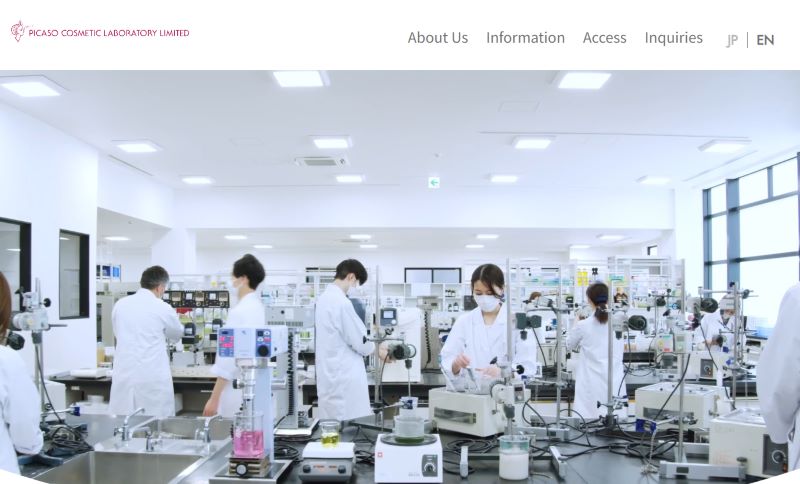
PICASO COSMETIC LABORATORY is a leading Japanese private label cosmetics manufacturer specializing in skincare products. Drawing on 200,000 formulation data points*1 and over 72 patented ingredients*2, PICASO proposes differentiated products focused on the skin-enhancing benefits associated with Japanese brands.
PICASO can develop ingredients derived from uniquely Japanese sustainable upcycled materials, as well as ingredients that leverage materials such as matcha and sake. The company offers end-to-end turnkey services, covering everything from ingredient selection through product storytelling designed with market communication in mind.
SOUTH KOREA
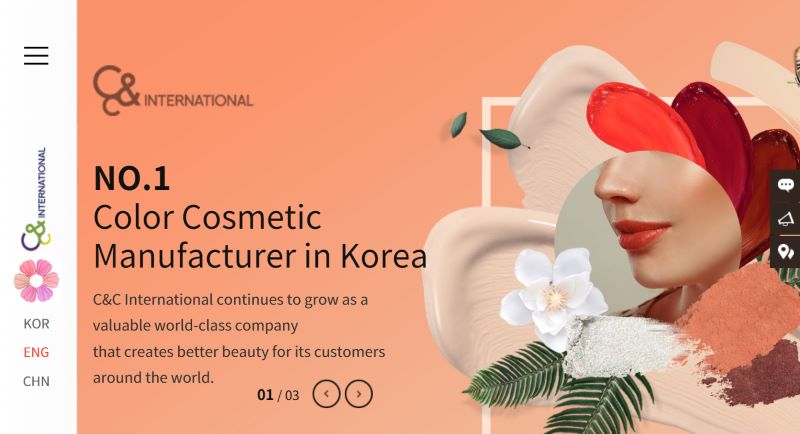
C&C International is a leading Korean cosmetics manufacturer for color cosmetics. The company creates new textures based on data accumulated through its leadership in K-beauty, combined with the development capabilities of its research team. C&C proposes products that anticipate upcoming trends.
Development With a prototyping system and production capability built on accumulated color and texture data, C&C can efficiently develop multi-color variations suited to diverse skin tones, as well as derivative lines featuring different textures.
ITALY
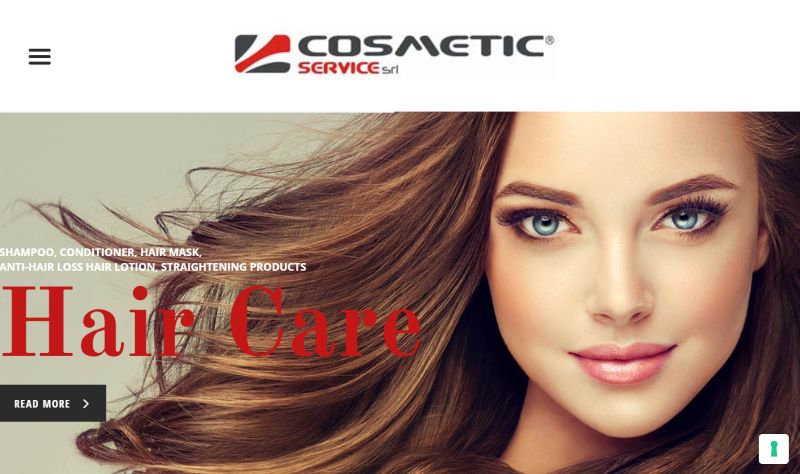
COSMETIC SERVICE is a full-service Italian private label cosmetics manufacturer specializing in hair care development. While meeting Italy’s high standards for organic practices and sustainability, the company designs formulations from the ground up, tailored to specific needs such as scalp care and damage repair.
COSMETIC SERVICE provides integrated support covering everything from container materials and graphic design to fragrance development. By integrating the brand’s world into the product’s appearance, texture, and scent, the company can create a memorable brand experience.