
Global Cosmetics ODM
J-beauty wins customers in everyday use. A cleansing oil turns milky and rinses away makeup. A watery lotion sinks in layer by layer. A sunscreen feels light enough to wear every day. Those small, repeatable moments of quality are what shoppers outside Japan go looking for.
They come from a market that puts skincare first and refines products over decades. A J-beauty private label can build on that reputation when it delivers the same kind of daily difference and tells a true origin story. Two signature categories, sunscreen and medicated brightening care, need a separate plan for the U.S.
Skincare sits at the center of Japan's beauty market. It made up 43.6% of Japan's cosmetics shipments by value in 2023, the largest category, according to the Japan Cosmetic Industry Association. That focus shows up in four experiences international shoppers often associate with J-beauty.
Cleansing oils and balms dissolve makeup and sunscreen with oil. Many formulas then emulsify when water is added, turning milky so they rinse off without a heavy film.
Customers feel the difference the first time they use one, which makes cleansing a strong entry product for a new line.
In Japanese routines, a watery "lotion" follows cleansing and is often patted or pressed into the skin, sometimes in several thin layers.
The step gives a routine a ritual quality without adding heavy products, and it is the J-beauty habit U.S. shoppers most often need explained.
Japanese sunscreens compete on lightweight milk, gel, and essence textures meant to be worn daily, often under makeup. Japan's industry-standard PA grades, from PA+ to PA++++, rate UVA protection on the label.
That combination has made Japanese sunscreens a frequent subject of comparison videos among skincare enthusiasts abroad.
J-beauty is associated with heritage-backed formulas refined over decades rather than frequent reinvention. Shiseido, for example, began in 1872 as Japan's first private Western-style pharmacy, in Tokyo's Ginza district.
For a private label, the lesson is consistency: the product should feel the same in every reorder.
The appeal is concrete, so describe it concretely. "Rinses clean without tightness" or "light enough for daily wear" tells shoppers more than "inspired by Japanese beauty rituals." Make sure each description matches how the finished product actually performs.
Industry coverage describes J-beauty through fewer steps, prevention, and formulas refined over years. It contrasts this with K-beauty's fast, trend-responsive launches and with Western dermatologist-led brands that lead with high-strength actives.
| Factor | J-beauty | K-beauty | Western clinical skincare |
|---|---|---|---|
| Core idea | Fewer, well-made steps and long-term skin condition | Novelty, playful formats, and multi-step routines | Targeted results from recognizable actives |
| Development rhythm | Gradual refinement of proven products | Fast launches that follow trends | Launches built around an active or a clinical story |
| Signature product types | Cleansing oils, hydrating lotions, lightweight daily sunscreens, gentle moisturizers | Essences, sheet masks, cushion compacts, trend ingredients | Retinoid, acid, and vitamin C treatments |
| What builds trust | Texture, consistency, heritage, and manufacturing quality | Visibility through social media and pop culture, plus accessible pricing | Ingredient strength, dermatologist endorsement, and clinical data |
These are tendencies, not rules, and many brands mix them. For a private label, the table works as a positioning choice. If your promise depends on refinement and repeat use, J-beauty positioning supports it. If it depends on constant novelty, a J-beauty story will pull in the opposite direction.
Japan's cosmetics exports have leaned heavily on one market. According to the Japan Cosmetic Industry Association, exports grew rapidly from around 2015 and peaked at ¥790.6 billion in 2021. They then declined, bottomed out in 2024, and recovered in 2025. China has accounted for roughly half of total export value.
Korea took a different path. Its Ministry of Food and Drug Safety estimated record cosmetics exports of $11.4 billion in 2025, with the U.S. as the largest destination at about $2.2 billion.
J-beauty reaches American shoppers less as a named category and more through individual brands. Industry coverage notes that heritage Japanese brands have sat in U.S. beauty cabinets for years, often without shoppers registering where they came from.
In the U.S., "J-beauty" is a less familiar shelf label than "K-beauty," so a J-beauty private label has to explain its value. Lead with what the customer will notice in the product, then use Japanese origin to explain why it is made that way.
We found no public dataset that measures J-beauty buyers in the U.S., so the segments below combine official and industry data with observable behavior. The evidence column shows how firmly each one is supported.
| Segment | Observable signal | What they value | Evidence |
|---|---|---|---|
| Formula-comparing skincare enthusiasts | Comparison content on Japanese sunscreens draws wide viewing, and some shoppers buy Japanese versions through import sellers | Texture, UV protection, and value for daily use | Medium. Industry and retailer reports, not sales data |
| Asian American shoppers | They spend 13% more per buyer on beauty than the average consumer, and 39% prefer fewer, higher-quality items (vs. 30% of all U.S. consumers) | Proven performance, routine, and long-term value | High for the behavior. The data covers beauty overall, not J-beauty specifically |
| Travelers to Japan | Visitor spending in Japan reached a record ¥9.46 trillion in 2025, with the U.S. third by nationality, and Japanese drugstores feature widely in shopping guides for visitors | Discovering everyday staples in store and repurchasing them at home | Medium to low. Spending data is official, but cosmetics purchases by nationality were not confirmed |
| Prestige skincare buyers | Heritage Japanese luxury skincare has a long presence in U.S. department stores and beauty retail | Craftsmanship, ritual, and consistent results | Medium. Industry coverage |
| Sensitive-skin and minimal-routine seekers | J-beauty is marketed around fewer steps and gentle formulas | Comfort, simplicity, and low irritation risk | Low. Based on positioning, not U.S. purchase data |
These segments share a preference for products that earn repeat purchase through quality. Few of them are shopping for novelty. Build the product and the proof around that preference, and test whether your chosen segment responds before you scale.
Everyday basics such as sunscreen, toner, and cleanser are usually bought for convenience. Yet some shoppers compare Japanese versions in detail, order them from import sellers, or stock up while traveling. That extra effort for everyday products is the pattern worth understanding.
A segment of shoppers wants the products they use most often to be better made, and treats Japanese origin as a shortcut to finding them.
If this holds, the purchase is driven by daily experience (texture, comfort, reliability) more than by trend or brand image.
If the hypothesis holds, the private label opportunity sits in daily staples with a difference customers can feel on first use. Heritage imagery on its own will not carry the line.
Most of what makes J-beauty appealing can be built into a U.S. cosmetic. Sunscreen and medicated brightening or acne care need a different regulatory path, and origin wording needs care.
| Element | Carries over? | What to check |
|---|---|---|
| Texture and sensory engineering | Yes | Write texture targets into the brief, and test the formula in the final U.S. package. |
| Minimal routine design | Yes | Make sure each product has a clear role, so the short routine reads as deliberate rather than incomplete. |
| Heritage ingredients such as rice, camellia, and fermented extracts | Yes, as cosmetic ingredients | Use INCI names on the label and keep ingredient claims supported. |
| Daily sunscreen | Not as-is | In the U.S., sunscreens are OTC drugs. Products marketed under the FDA sunscreen monograph may use only its listed active ingredients, which added bemotrizinol at up to 6% by a final order effective August 9, 2026. Many filters common in Japanese sunscreens are still not listed. U.S. labels follow the FDA format with SPF and "Broad Spectrum" designations rather than PA grades. |
| Quasi-drug (medicated) brightening or acne care | Not as-is | Japan's quasi-drug category has no U.S. equivalent. Claims to affect melanin production or treat acne are drug claims under FDA rules. Appearance-only wording, such as "skin looks brighter," still needs support and a regulatory review. |
| Japanese origin | Yes, when true | Imported products must be marked with their country of origin. Presenting a product made elsewhere as J-beauty can mislead buyers, so have origin wording reviewed. |
Start with the category where the J-beauty difference is easiest to feel, then keep the first line short enough that every product earns its place.
For choosing and formulating an anchor ingredient, see How to Develop a Skincare Line Around a Hero Ingredient. For ways to make the line hard to copy, see Differentiation Strategy for Skincare Brands.
A Japanese manufacturer brings the formulation style. Your launch also needs a partner that can deliver it under U.S. rules and on your timeline. Confirm these points before requesting samples.
Compare candidates in the Japan skincare ODM manufacturer list. If you are still deciding between countries, see Korean vs. Japanese Skincare Manufacturers.
"J-beauty" is a marketing term, but shoppers read it as a signal of Japanese origin. Manufacturing in Japan keeps the story truthful. If any part is made elsewhere, describe the origin accurately and have the wording reviewed.
Only if it is reformulated or confirmed to meet U.S. OTC sunscreen requirements, including the permitted active ingredients, concentrations, and label format. Many Japanese sunscreens use filters that the FDA monograph does not list.
PA grades are Japan's industry rating for UVA protection, running from PA+ to PA++++. U.S. sunscreen labels follow the FDA format, which uses SPF and "Broad Spectrum" instead. Confirm with regulatory counsel before adding any rating the FDA format does not define.
J-beauty is often marketed around gentle formulas, but the label alone does not make a product suitable for sensitive skin. Suitability depends on the formula and testing. Any sensitive-skin claim needs support from the finished product.
Daily cosmetics such as cleansing oils, hydrating toners, and moisturizers avoid the drug requirements that apply to sunscreens and let customers feel the difference quickly.
Focus on one customer and one daily product, and make its difference easy to feel and explain. Large brands tend to cover many categories at once, which leaves room for a new brand that owns one routine step for one clearly defined customer.
Build a J-beauty private label around one daily product that customers can feel is better, made by a Japanese manufacturer that can meet U.S. rules. Let the texture and consistency carry the story, keep sunscreen and brightening claims out of the first launch unless you have planned for their separate requirements, and test your buyer segment before scaling the line.
Compare Japanese skincare manufacturers by formulation depth, U.S. launch experience, and MOQ. Then send each one the same brief with your anchor product, texture targets, and planned claims.
Find Your Match
To identify proven private label cosmetic manufacturers, this article examined 115 exhibitors at MakeUp in New York in 2025*, a global trade show where cosmetic trends and technologies from around the world converge. Here, we present a detailed overview of three carefully selected manufacturing partners that operate as full-service turnkey providers, backed by extensive expertise and unique technologies not found elsewhere.
*Source: MakeUp in New York Official Website | As of survey conducted in December 2025 (https://www.makeup-in-newyork.com/en/exhibitors)
Advertiser Disclosure:
We receive compensation from some of the companies listed below.This compensation may affect which companies are included and the order in which they appear.
JAPAN
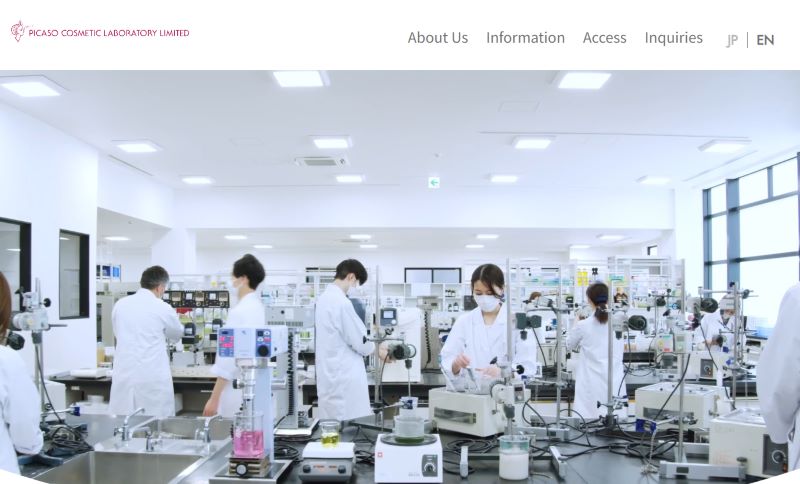
PICASO COSMETIC LABORATORY is a leading Japanese private label cosmetics manufacturer specializing in skincare products. Drawing on 200,000 formulation data points*1 and over 72 patented ingredients*2, PICASO proposes differentiated products focused on the skin-enhancing benefits associated with Japanese brands.
PICASO can develop ingredients derived from uniquely Japanese sustainable upcycled materials, as well as ingredients that leverage materials such as matcha and sake. The company offers end-to-end turnkey services, covering everything from ingredient selection through product storytelling designed with market communication in mind.
SOUTH KOREA
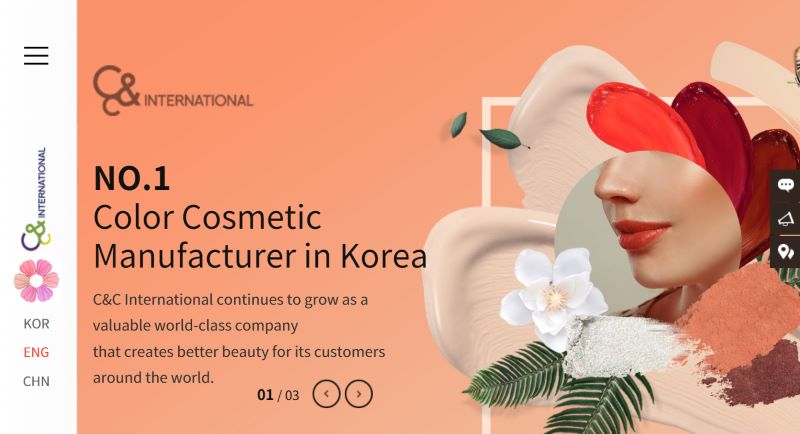
C&C International is a leading Korean cosmetics manufacturer for color cosmetics. The company creates new textures based on data accumulated through its leadership in K-beauty, combined with the development capabilities of its research team. C&C proposes products that anticipate upcoming trends.
Development With a prototyping system and production capability built on accumulated color and texture data, C&C can efficiently develop multi-color variations suited to diverse skin tones, as well as derivative lines featuring different textures.
ITALY
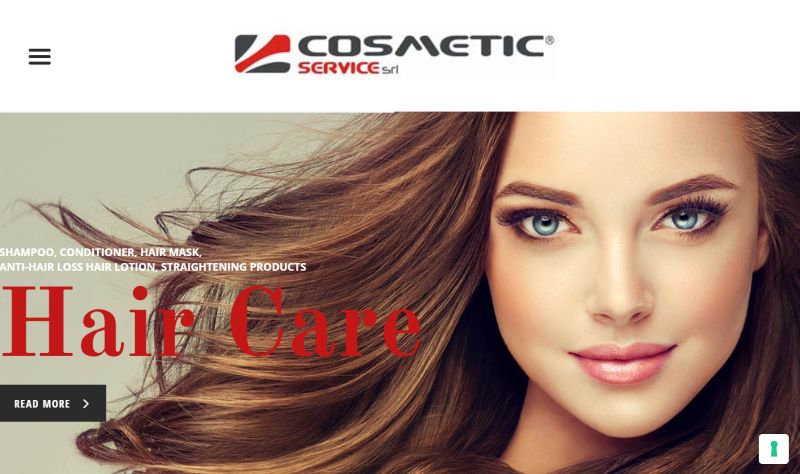
COSMETIC SERVICE is a full-service Italian private label cosmetics manufacturer specializing in hair care development. While meeting Italy’s high standards for organic practices and sustainability, the company designs formulations from the ground up, tailored to specific needs such as scalp care and damage repair.
COSMETIC SERVICE provides integrated support covering everything from container materials and graphic design to fragrance development. By integrating the brand’s world into the product’s appearance, texture, and scent, the company can create a memorable brand experience.